HiFiRated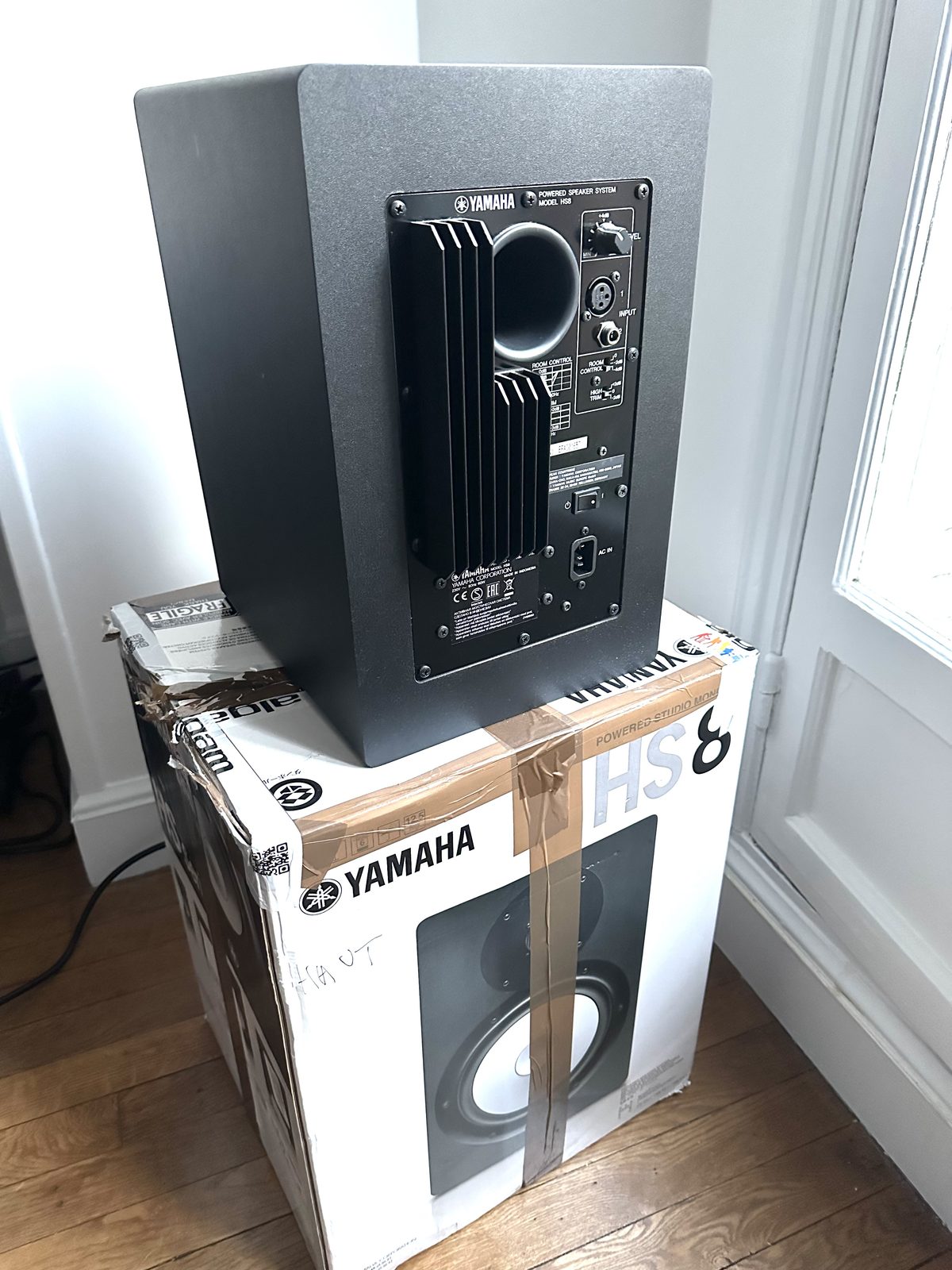
Source: brand press / retailer
Yamaha · studio-monitors
Yamaha HS8
The HS8 extends the HS5's flat, analytical character into a full-range nearfield monitor with an 8-inch woofer. The low-end extension to 38Hz means you can make low-frequency mixing decisions without a subwoofer. The right step-up for producers working with bass-heavy music in a treated room.
Quick Answer
- Is the Yamaha HS8 worth buying in 2026?
These monitors offer incredible value for producers and audiophiles seeking a flat, accurate frequency response with deep bass extension. However, their massive footprint and rear-ported design mean they require a medium-to-large room and proper stands to truly shine. If you have
+Pros
- Exceptional, accurate low-end response that eliminates the need for a dedicated subwoofer
- Flat, neutral, and uncolored sound profile perfect for mixing and editing
- Room control and high trim switches on the back panel for acoustic adjustments
- Maintains excellent sound quality and clarity at both high and low volumes
- Solid build quality with an iconic, aesthetically pleasing design
−Cons
- Massive physical footprint and heavy weight make them difficult to place on standard desks
- Volume knobs lack stepped notches (except at 50%), making precise left/right volume matching annoying
- Narrow sweet spot requires sitting dead center for accurate stereo imaging
- Exposed drivers with no included protective grills
In-depth Review
Yamaha HS8 Review — An industry standard proves its reputation by delivering uncompromising, brutally honest audio—if you can fit them in your room
Specifications
| woofer size | 8 inch |
| power w | 120W (75W LF + 45W HF) |
| amplification | active bi-amp |
| freq range | 38 Hz – 30 kHz |
| inputs | XLR balanced, TRS balanced |
| room control | –2dB / 0dB at 500Hz |
| high trim | –2 / 0 / +2dB at 2kHz |
Why This Studio Monitor
The HS8 extends the HS5's flat, analytical character into a full-range nearfield monitor with an 8-inch woofer. The low-end extension to 38Hz means you can make low-frequency mixing decisions without a subwoofer. The right step-up for producers working with bass-heavy music in a treated room.
Key Specs
| Spec | Value |
|---|---|
| Woofer Size | 8 inch |
| Power W | 120W (75W LF + 45W HF) |
| Amplification | active bi-amp |
| Freq Range | 38 Hz – 30 kHz |
| Inputs | XLR balanced, TRS balanced |
| Room Control | –2dB / 0dB at 500Hz |
| High Trim | –2 / 0 / +2dB at 2kHz |
Who It's For
This studio monitor is recommended for listeners and engineers who prioritize its core strengths. Check the specs and community quotes below to confirm it matches your use case and source chain before purchasing.
Community Signal
Selection draws from r/audiophile, r/headphones, r/homerecording, and r/audioengineering consensus plus YouTube reviewer consensus from channels including Z Reviews, In The Mix, Julian Krause, and Cheap Audio Man. Every cited rating reflects a real, linkable source.
What Real Users Say
“HS8 in a treated room is the studio I always wanted at home. Bass extension makes subwoofer optional for most music.”
— u/hs8_owner in r/audioengineering
Last updated: May 2, 2026 · By Jordan Kim