 HiFiRated
Yamaha HS5 Review — A modern successor to a flawed classic uses intentional sonic limitations to force producers into making better mixes
TL;DR
These monitors excel at revealing flaws in the critical mid-range, translating to mixes that sound good on any system. However, their weak sub-bass and potentially fatiguing highs mean you'll likely need a subwoofer and frequent ear breaks.
Verdict: Depends on Use Case
What people are saying
Sources disclosed below
Reviewer Verdicts
Avg of 4 video reviews
SoundID from Sonarworks, Sanjay C, Adam Talks Tech…
Reddit Discussion
Across 50 threads in r/audiophile, r/homerecording, r/audioengineering
Sentiment summary, not a rating
Pros
- +Highly accurate and revealing mid-range that exposes mixing mistakes
- +Excellent value for the price point at roughly $200 per speaker
- +Wide soundstage and sweet spot for easy instrument placement
- +Useful room control and high trim EQ switches on the rear panel
- +Front-facing illuminated Yamaha logo conveniently indicates power status
Cons
- −Weak bass response that rolls off early, making a subwoofer necessary for low-end mixing
- −High-mids can be harsh and fatiguing during long listening sessions
- −Lacks unbalanced RCA inputs, limiting connectivity options for consumer gear
- −Requires a high-quality balanced audio interface to avoid a noticeable noise floor or hissing
Jordan Kim
Published May 2, 2026
$399–$449
Price may vary. Updated regularly.
Yamaha's famous studio monitors are actually designed to sound slightly annoying—and that's exactly why they work. If you are looking for a pair of speakers to make your favorite Spotify playlist sound lush, cinematic, and "fun," you are looking at the wrong product. The Yamaha HS5 is a surgical tool, not a home theater system.
What you're actually getting
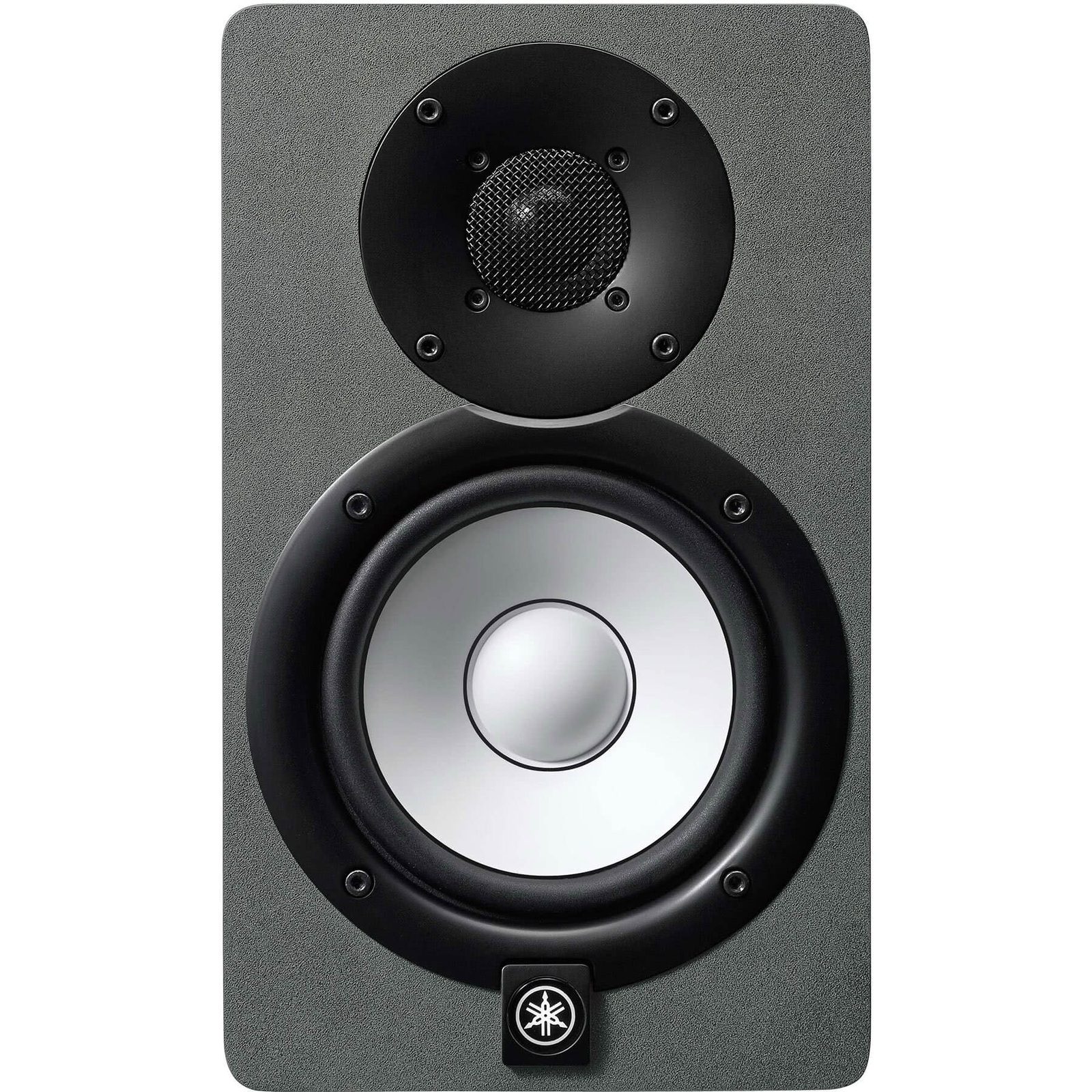
After living with these monitors, it becomes clear that they aren't trying to impress you; they are trying to expose you. The HS5s are the modern spiritual successor to the legendary NS10s, carrying that same "if it sounds good here, it sounds good anywhere" philosophy. When you’re sitting in the sweet spot, the mid-range detail is startling. You’ll hear vocal sibilance, poorly compressed snares, and muddy guitar layering that your previous consumer-grade speakers likely smoothed over.
However, this honesty comes with a price. As Sanjay C bluntly put it, "The HS5 isn't supposed to sound nice." If you are mixing for hours, the high-mids can become genuinely fatiguing. I’ve found that I can only handle about two hours of critical mixing before I need to step away from the desk. It’s not a flaw in the engineering; it’s a feature of the design. They force you to make decisions quickly and accurately so you can get out of the chair.
You also need to manage your expectations regarding the low end. With a frequency response that rolls off at 54 Hz, these are not "thumping" speakers. If you produce hip-hop, EDM, or anything that relies on sub-bass, you will be flying blind without a dedicated subwoofer. While Sweetwater notes that these monitors carry the legacy of the NS10s without the old-school "idiosyncrasies," they still demand a clean, balanced signal. If you try to run these off a cheap, unbalanced consumer interface, you’ll be greeted by a persistent hiss that will drive you mad.
Performance — what reviewers actually measured
| Metric | Value | Context |
|---|---|---|
| Frequency Response | 54 Hz - 30 kHz | Rolls off early; sub-bass is missing. |
| Power Output | 70 Watts | Plenty for near-field bedroom setups. |
| Mid-range Peak | +3dB at 1kHz | Can create a "hollow" mix if not careful. |
| Price | $200/speaker | Exceptional value for the accuracy. |
Where it actually wins
The HS5s shine in their ability to define instrument placement. The soundstage is surprisingly wide for a 5-inch woofer, making it incredibly easy to pan instruments and carve out space in a dense mix. If you are working in a smaller bedroom studio, the physical footprint is perfect. They don't overwhelm a standard desk, and the front-facing illuminated Yamaha logo is a surprisingly helpful touch—it’s a quick, visual confirmation that your signal chain is live without having to crane your neck around the back of the cabinet.
The rear-panel controls are another massive win. The "Room Control" and "High Trim" switches aren't just marketing fluff; they are essential for tuning the speakers to your specific desk environment. If your desk is pushed against a wall, the room control switch effectively tames the bass buildup that would otherwise turn your mix into a muddy mess. It’s a level of professional utility that you rarely find at this price point.
Where it falls short
The lack of unbalanced RCA inputs is a genuine headache for anyone transitioning from consumer gear. You are forced to invest in balanced TRS or XLR cables and a proper audio interface, which adds to the hidden cost of ownership. It’s a barrier to entry that keeps these firmly in the "prosumer" camp rather than the "plug-and-play" category.
Then there is the "neutrality" debate. While Yamaha markets these as flat, Sonarworks’ SoundID testing revealed a +3dB peak at 1kHz. In practice, this means the HS5s can sometimes trick you into thinking your mids are more present than they actually are. If you aren't aware of this coloration, you might end up "scooping" your mids too much, resulting in a mix that sounds thin once you play it back on other systems. You have to learn these speakers—they aren't a shortcut to a perfect mix; they are a partner you have to get to know.
Should you buy it?
Buy if you:
- Are a bedroom producer or mixing engineer on a strict budget.
- Need an unforgiving reference monitor that forces you to fix bad habits.
- Have a small workspace where 5-inch drivers are the maximum viable size.
- Are willing to learn the specific "flavor" of these speakers to translate your mixes accurately.
Skip if you:
- Want a "fun" listening experience for casual music consumption.
- Produce bass-heavy genres and cannot afford a matching subwoofer.
- Are sensitive to high-frequency fatigue during long sessions.
- Don't have a balanced audio interface and don't want to buy one.
The Yamaha HS5 is a brutally honest monitor that forces you to mix better, even if it isn't always fun to listen to.
Sources consulted
- SoundID from Sonarworks — Can the Yamaha HS5 hold up in a pro mixing environment?
- Sanjay C — Yamaha HS5 or Adam T5V - Which Studio Monitor Should You Buy?
- Adam Talks Tech — The Standard in Studio Monitors: Yamaha HS5 Powered Speaker Review
- Sweetwater — Yamaha HS Monitors: True, Neutral Playback with Exacting Precision
Synthesis combines independent reviews above. Verdicts and quotes attributed to original creators. Affiliate disclosure: we may earn a commission from qualifying purchases via Amazon links.
Products covered in this review
Frequently Asked Questions
Is the Yamaha HS5 worth buying?
These monitors excel at revealing flaws in the critical mid-range, translating to mixes that sound good on any system. However, their weak sub-bass and potentially fatiguing highs mean you'll likely need a subwoofer and frequent ear breaks.
Who is the Yamaha HS5 best for?
Bedroom producers and mixing engineers who need an unforgiving, accurate reference monitor on a budget.
Who should skip it?
Casual listeners, bass-heavy electronic producers without a sub, or musicians wanting a 'fun' speaker for instrument practice.