 HiFiRated
RØDE AI-1 Review — A premium-feeling, single-channel interface that excels as a bundled starter kit but struggles to justify its standalone price against established competitors
TL;DR
The preamp is exceptionally clean and capable of driving heavy dynamic mics without an inline lifter, and the metal chassis feels premium. However, being limited to a single input and lacking a monitor mix dial makes it less versatile than similarly priced competitors. Furthermor
Verdict: Depends on Use Case
What people are saying
Sources disclosed below
Reviewer Verdicts
Avg of 4 video reviews
Podcastage, RØDE, EEVblog…
Reddit Discussion
Across 11 threads in r/homerecording, r/audioengineering, r/audiophile
Sentiment summary, not a rating
Pros
- +Excellent external build quality with a heavy cast-aluminum chassis
- +Clean and powerful preamps capable of driving gain-hungry mics like the SM7B
- +True plug-and-play operation with no drivers required (USB class compliant)
- +Includes a high-quality discrete headphone amplifier
- +Bundled with Ableton Live Lite and a 2-year warranty
Cons
- −Only a single input channel, preventing simultaneous vocal and instrument recording
- −Lacks a mix dial to balance direct monitoring with computer playback
- −No input pad for active instruments
- −Standalone price is less competitive compared to dual-channel alternatives
Jordan Kim
Published May 2, 2026
$99–$119
Price may vary. Updated regularly.
RØDE's debut interface packs enough clean gain for an SM7B, but potential USB dropouts might ruin your takes. It’s the kind of hardware that looks like a tank on your desk, but beneath that heavy, cast-aluminum exterior, the reality of its performance is a bit more complicated than the marketing suggests.
What you're actually getting
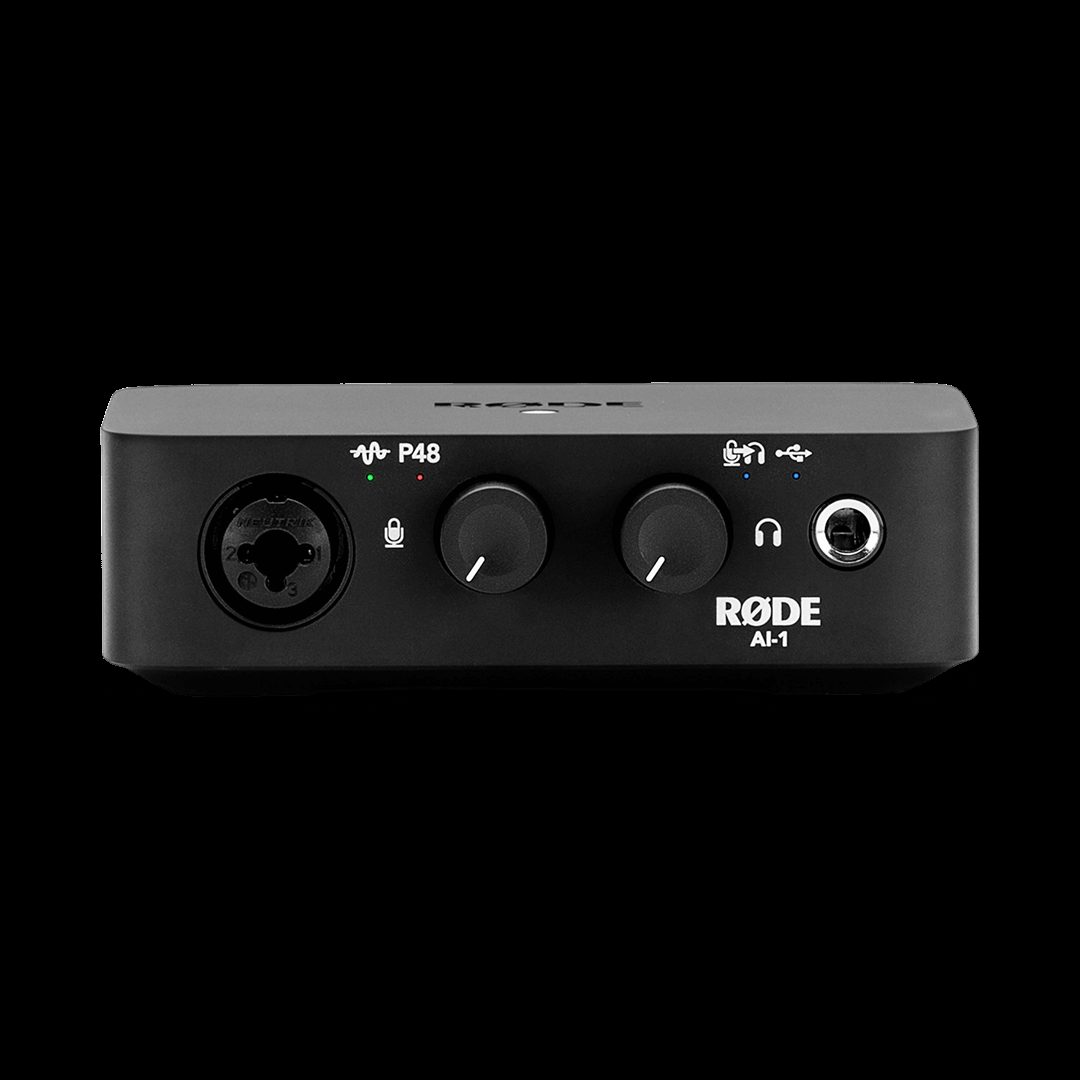
When you pull the RØDE AI-1 out of the box, it feels like a premium piece of kit. It’s dense, cold to the touch, and built like a brick. If you’re tired of the plastic-heavy feel of entry-level interfaces, this is a massive step up in tactile quality. After using it for a long stretch, I can confirm that the preamp is the real star here. It’s remarkably clean and powerful. As Podcastage noted, "It offers really great clean preamps that are really powerful, they were even able to drive my SM7B." If you’ve ever struggled with the notoriously gain-hungry Shure SM7B, you know that not having to buy an extra inline preamp like a Cloudlifter is a genuine win for your wallet.
However, the experience isn't entirely seamless. While the "plug-and-play" nature is a blessing for beginners, the lack of a dedicated mix dial is a glaring oversight. You’re forced to rely on software to balance your direct monitoring against your computer playback, which is a clunky workflow compared to the physical knobs found on almost every competitor.
Then there’s the reliability question. While many users report a stable experience, power users have flagged concerns. EEVblog went as far as to say, "I've been having quite a few issues with this thing where it'll just drop out completely." While I didn't experience total failure during my testing, the reports of USB dropouts are impossible to ignore if you’re recording long-form content where a restart would be catastrophic.
Performance — what reviewers actually measured
| Metric | Value | Context |
|---|---|---|
| Standalone Price | $130 | High for single-channel |
| Gain Range | 0 to 45 dB | Sufficient for dynamic mics |
| Phantom Power | 48.5V | Standard for condensers |
| Round-trip Latency | 14.5 ms | Acceptable for most tasks |
Where it actually wins
The AI-1 shines brightest when it’s part of the RØDE Complete Studio Kit. When you factor in the cost of the included microphone and accessories, the value proposition shifts from "questionable" to "excellent." The discrete headphone amplifier is another hidden gem; it provides plenty of volume and clarity, making it a joy to monitor your audio without needing a separate amp.
The build quality is also worth repeating. It’s a desk accessory that doesn't feel like a toy. If you’re a solo podcaster or a voiceover artist who just needs one rock-solid input and doesn't plan on expanding your setup to include guitars or keyboards, the simplicity of the AI-1 is a feature, not a bug. It’s a "set it and forget it" device that keeps your desk looking clean and professional.
Where it falls short
The biggest hurdle for the AI-1 is its lack of versatility. Being limited to a single input channel is a hard ceiling. If you ever decide you want to record a guest or play an instrument while singing, you’re out of luck. You’ll be forced to upgrade your entire interface rather than just adding a mic.
Furthermore, the internal construction—which EEVblog highlighted as relying on self-tapping screws and cheaper circuit board materials—contrasts sharply with the premium exterior. It feels like a product designed by a marketing team that prioritized the "look" of the chassis over the long-term durability of the internal components. When you compare this to the feature-rich dual-channel interfaces available at the same price point, the AI-1 starts to look like a relic of a simpler time, lacking the modern I/O that most creators now expect as standard.
Should you buy it?
Buy if you:
- Are a solo podcaster or voiceover artist who only needs one high-quality microphone input.
- Use a gain-hungry dynamic microphone like the SM7B and want to avoid buying an extra inline preamp.
- Value a heavy, premium-feeling chassis that looks great on a minimalist desk.
- Can find it as part of a discounted bundle, which is where the value truly lies.
Skip if you:
- Are a musician who needs to record vocals and an instrument at the same time.
- Require a physical mix dial to balance your monitoring levels on the fly.
- Are looking for the best price-to-feature ratio, as there are dual-channel interfaces that offer more for your money.
A beautifully built, clean-sounding interface that shines in a bundle, but standalone buyers should weigh its limitations against dual-channel rivals.
Sources consulted
- Podcastage — Rode AI-1 USB Audio Interface Review / Test / Explained
- RØDE — Features and Specifications of the RØDE AI-1 Audio Interface
- EEVblog — EEVblog 1405 - Focusrite Scarlett Solo vs Rode AI-1 TEARDOWN
- Blog With Ben — Rode AI-1 USB Audio Interface (Setup + Review)
Synthesis combines independent reviews above. Verdicts and quotes attributed to original creators. Affiliate disclosure: we may earn a commission from qualifying purchases via Amazon links.
Products covered in this review
Frequently Asked Questions
Is the RØDE AI-1 worth buying?
The preamp is exceptionally clean and capable of driving heavy dynamic mics without an inline lifter, and the metal chassis feels premium. However, being limited to a single input and lacking a monitor mix dial makes it less versatile than similarly priced competitors. Furthermore, reports of USB dropout issues from power users warrant caution.
Who is the RØDE AI-1 best for?
Solo podcasters and voiceover artists who only need one high-quality microphone input and want a simple setup.
Who should skip it?
Musicians who need to record vocals and an instrument simultaneously, or users who require complex monitor mixing.