 HiFiRated
RME ADI-2 DAC FS Review — A complex, feature-packed pro-audio tool proves it has the musical chops to win over traditional audiophiles
TL;DR
The RME ADI-2 DAC FS offers unmatched versatility with its built-in parametric EQ, hardware gain staging, and dedicated IEM output. While the menu system is notoriously complex and the soundstage isn't the widest, its flawless technical performance and natural tonality make it an
Verdict: Buy
What people are saying
Sources disclosed below
Reviewer Verdicts
Avg of 4 video reviews
Darko Audio, A British Audiophile, iiWi Reviews…
Pros
- +Incredibly feature-rich with a 5-band parametric EQ, crossfeed, and multiple digital filters
- +Dedicated low-noise 3.5mm output specifically designed for sensitive IEMs
- +Highly detailed, natural sound signature that avoids being overly clinical or harsh
- +Excellent implementation of variable output with hardware gain switching for preamp use
- +Compact, solid all-metal build quality that fits easily on a desktop
Cons
- −The menu system is clumsy, unintuitive, and has a steep learning curve
- −The user manual is overwhelmingly dense and heavy
- −Soundstage is relatively modest and not the widest or deepest in its class
- −Uses a basic off-board switching power supply rather than a linear one
Jordan Kim
Published May 3, 2026
RME's studio-grade DAC packs so many features its manual weighs a third of a kilo—but does it actually sound good? If you’re expecting the clinical, sterile, "pro-audio" sound that usually comes with gear designed for mastering engineers, you’re in for a surprise. This isn't just a measurement machine; it’s a Swiss Army knife that happens to be one of the most musical pieces of kit you can put on your desk.
What you're actually getting
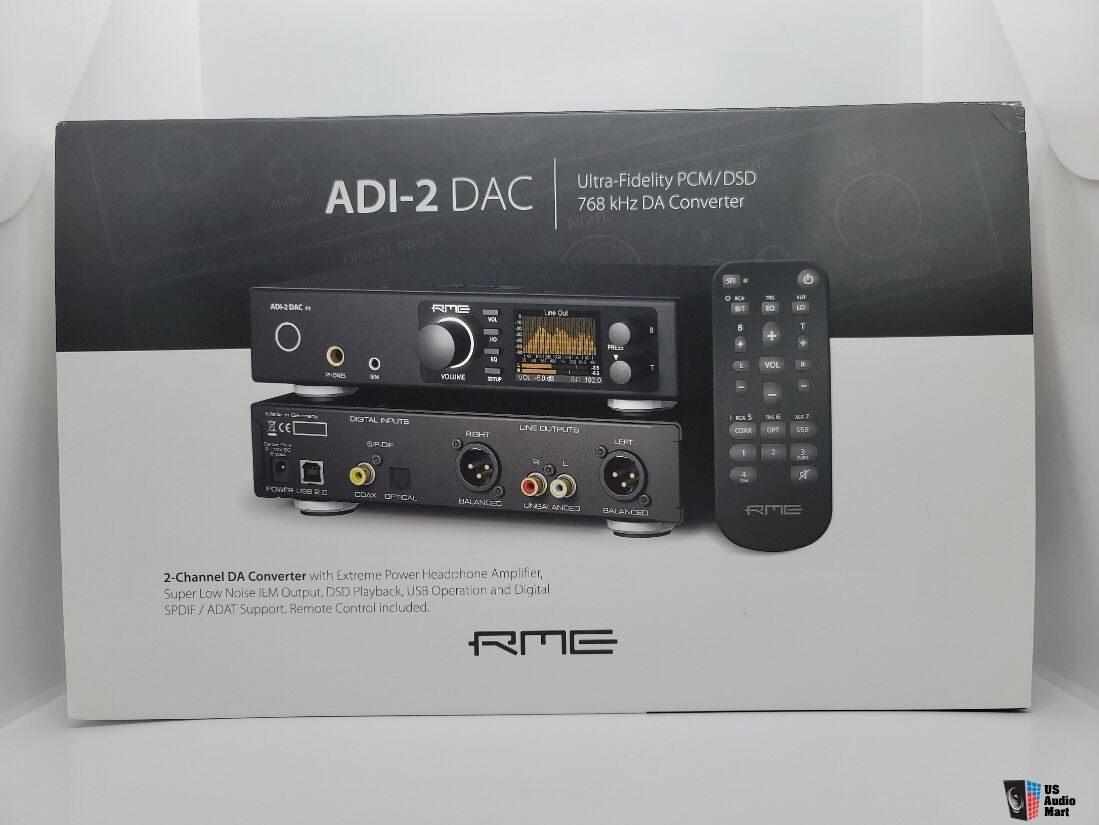
The RME ADI-2 DAC FS is an objectivist’s dream that somehow manages to avoid the "soulless" trap. It’s a compact, all-metal box that feels like it could survive a drop from a rack, yet it’s packed with enough DSP to make your head spin. You aren't just buying a converter; you're buying a 5-band parametric EQ, a sophisticated crossfeed circuit, and a dedicated IEM output that finally solves the hiss and impedance mismatch issues that plague sensitive in-ear monitors.
The sound signature is a point of contention among reviewers, but that’s largely because it’s so transparent that it reflects the rest of your chain. As iiWi Reviews noted, many expect RME to sound "flat and analytical," but the reality is a rich, natural presentation that doesn't lean into the harshness often associated with high-end ESS or AKM chips. Whether you’re running the older AKM version or the newer ESS variant, RME has tuned these so closely that you’d be hard-pressed to tell them apart in a blind test.
However, this level of control comes with a tax: the user experience. You’re going to spend your first week with this thing feeling like you’re flying a fighter jet without a manual. As Passion for Sound put it, "The menus are really clumsy at first, it takes quite a while to get used to navigating them." You don't just plug this in and forget it; you engage with it. If you’re the type of person who wants to tweak the Q-factor of your bass shelf while listening to a track, this is your endgame.
Sound — what reviewers actually heard
| Metric | Value | Context |
|---|---|---|
| SNR | 120 dB | Exceptionally quiet background |
| IEM Power | 40 mW | Perfect for sensitive gear |
| Formats | PCM 768kHz/DSD256 | Future-proofed specs |
| Weight | 912.6g | Solid, dense build |
- The "Pro" Advantage: The hardware gain switching is a game changer. It allows you to optimize the output stage for your specific headphones, ensuring you’re always in the "sweet spot" of the volume pot.
- The EQ Factor: Having a 5-band parametric EQ built into the hardware means you can fix room modes or headphone frequency response dips without touching your computer’s CPU or software.
- The IEM Output: It’s not just a 3.5mm jack; it’s a low-noise, low-impedance circuit that makes sensitive IEMs sound dead silent.
Where it actually wins
The ADI-2 DAC FS wins because it respects the user’s intelligence. Most "audiophile" gear hides behind marketing fluff about "musicality" to mask poor engineering. RME does the opposite: they give you the raw, unvarnished truth of the recording, but then provide the tools to shape that truth to your preference.
The parametric EQ is the standout feature here. Being able to save presets for different headphones—say, a bass boost for your open-backs and a treble taming for your brighter cans—is a level of utility that most $2,000 DACs ignore. It’s a tool for people who actually listen to music rather than just collecting gear. As A British Audiophile aptly put it, this is "an objectivist dream many consider to be of reference quality without all the audiophile nonsense."
Where it falls short
The menu system is the elephant in the room. It is, frankly, a relic of pro-audio design where functionality is prioritized over human-computer interaction. You will find yourself buried in sub-menus to change simple settings, and the manual is so dense it’s practically a textbook. Darko Audio wasn't kidding when they called it "both a dream and a nightmare."
Furthermore, if you’re looking for a massive, holographic soundstage that feels like it extends ten feet past your ears, you might find the RME a bit "contained." It’s accurate and precise, but it doesn't artificially inflate the space. It gives you what’s on the recording—no more, no less. Finally, for a unit at this price point, the reliance on a basic switching power supply feels like a missed opportunity, even if the internal filtering is top-tier.
Should you buy it?
Buy if you
- Value precision, transparency, and technical perfection over "colored" sound.
- Use sensitive IEMs and are tired of background hiss.
- Want to use hardware-level EQ to fix your headphones' frequency response.
- Are a "tweak-head" who enjoys customizing every aspect of the signal chain.
Skip if you
- Want a "plug-and-play" experience and hate menu diving.
- Are looking for a warm, euphonic sound signature to "fix" bright recordings.
- Prioritize a massive, expansive soundstage above all else.
An objectivist's dream that pairs reference-grade measurements with an unprecedented level of DSP control and surprisingly musical sound.
Sources consulted
- Darko Audio — RME's ADI-2 DAC FS is the DAC to beat at €1K
- A British Audiophile — RME ADI-2 FS DAC Review
- iiWi Reviews — RME vs Newer Chinese DACs - Who Wins?!
- Passion for Sound — RME ADI-2 DAC FS Review - Is This the Best DAC Around $2000?
Synthesis combines independent reviews above. Verdicts and quotes attributed to original creators. Affiliate disclosure: we may earn a commission from qualifying purchases via Amazon links.
Products covered in this review
Frequently Asked Questions
Is the RME ADI-2 DAC FS worth buying?
The RME ADI-2 DAC FS offers unmatched versatility with its built-in parametric EQ, hardware gain staging, and dedicated IEM output. While the menu system is notoriously complex and the soundstage isn't the widest, its flawless technical performance and natural tonality make it an endgame all-in-one desktop solution.
Who is the RME ADI-2 DAC FS best for?
Tweak-happy audiophiles, desktop listeners, and IEM users who want total control over their sound via hardware EQ and DSP.
Who should skip it?
Plug-and-play purists who hate menu diving, or listeners looking for the absolute widest, most holographic soundstage.