 HiFiRated
Neumann KH 80 DSP Review — A highly respected, surgical tool that proves to be a double-edged sword depending on the engineer's ears and ecosystem
TL;DR
If you want clinical mid-range detail for guitars or vocals, these are incredibly revealing and powerful for a 4-inch monitor. However, the mid-forward tuning can cause mix translation issues for some engineers, and locking the flagship DSP room correction behind an iPad app is a
Verdict: Depends on Use Case
What people are saying
Sources disclosed below
Reviewer Verdicts
Avg of 4 video reviews
Riffs, Beards & Gear, Ed Thorne | Mixing & Mastering, Learn Audio Engineering…
Reddit Discussion
Across 48 threads in r/audiophile, r/homerecording, r/audioengineering
Sentiment summary, not a rating
Pros
- +Exceptional mid-range detail and transparency
- +Incredible center imaging and stereo accuracy
- +Massive clean headroom and volume for a 4-inch speaker
- +Convenient auto-standby power-saving feature
- +Built-in acoustic controls to compensate for desk placement
Cons
- −Lacks sub-bass extension due to the small 4-inch woofer
- −Network DSP setup is notoriously frustrating and requires an iPad
- −Mid-forward sound signature requires an adjustment period to avoid mix translation errors
Jordan Kim
Published May 3, 2026
Neumann's tiny 4-inch monitors deliver mind-blowing imaging, but their mid-forward tuning might actually ruin your mixes if you aren't prepared for the honesty. These aren't your typical "polite" bookshelf speakers; they are surgical instruments that demand you pay attention to every frequency between 500Hz and 3kHz.
What you're actually getting
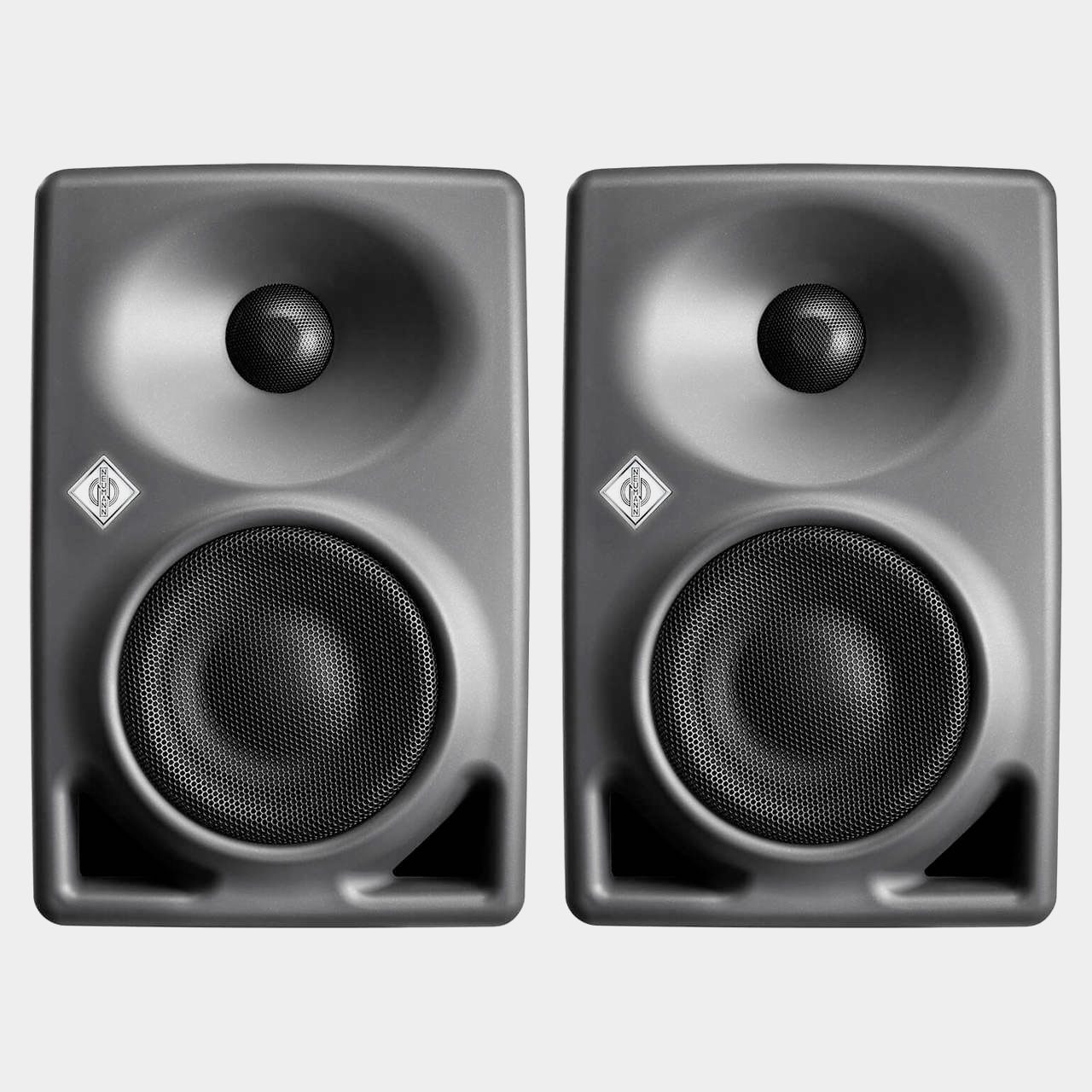
When you unbox the KH 80 DSP, you’re buying into a legacy of precision engineering that makes most other 4-inch monitors look like toys. The build quality is dense, the amplification is surprisingly muscular, and the stereo imaging is so locked-in it feels like there’s a phantom center speaker sitting on your desk. As Z Reviews aptly noted, "There's this just hunk of sound coming right there like there's a third speaker." It’s a rare feat for a monitor this small to create such a cohesive, holographic soundstage.
However, the "Neumann sound" here is unapologetically mid-forward. This is where the divide happens. If you’re a guitar player or a vocal-centric mixer, you’ll likely find these to be a revelation. Riffs, Beards & Gear called them "beastly on guitar tones," noting that you can hear every nuance in that critical mid-range. But if your ears aren't calibrated for this specific frequency response, you’re in for a rough ride.
The danger lies in how you interpret that forwardness. Ed Thorne, a mixing engineer who spent significant time with these, found the experience frustrating: "I was pushing the mid-range, pushing it and pushing it, thinking this is uncomfortable, I don't like this." He ended up overcompensating by scooping the mids out of his mixes, which led to thin, hollow-sounding masters once he played them back on other systems. These monitors don't just tell you what's there; they scream it at you. If you don't trust your ears to interpret that "scream" correctly, you will end up chasing your tail.
Sound — what reviewers actually heard
| Metric | Value | Context |
|---|---|---|
| Woofer | 4-inch | Surprisingly punchy, but lacks sub-bass |
| Tweeter | 1-inch | Crisp, detailed, non-fatiguing |
| Amp Power | 125W/75W | Massive headroom for the size |
| Max SPL | 114 dB | Loud enough to hurt your ears |
Where it actually wins
The KH 80 DSP wins on pure, unadulterated clarity. In a small home studio where you don't have the luxury of massive acoustic treatment or large-format soffit-mounted monitors, these speakers provide a level of detail that is usually reserved for much larger, more expensive setups. The transient response is lightning-fast, making them excellent for editing drums or dialing in compression settings on a snare.
The built-in DSP is another massive win—provided you can actually access it. The acoustic controls allow you to compensate for desk reflections and wall proximity with surgical precision. When you get the room correction dialed in, the frequency response flattens out in a way that makes the speakers disappear, leaving you with nothing but the mix. For those who can navigate the setup, it’s a transformative experience that turns a compromised room into a viable mixing environment.
Where it falls short
The biggest failure of the KH 80 DSP isn't the sound—it's the ecosystem. Locking the DSP room correction behind a proprietary iPad app is a massive workflow killer. If you don't own an iPad, you’re essentially buying a "dumb" speaker, which defeats the purpose of the "DSP" in the name. It’s an archaic, frustrating barrier that feels completely out of place for a modern pro-audio product.
Then there’s the physical limitation of the 4-inch woofer. While Neumann has worked miracles with the internal processing, physics is still physics. You aren't getting sub-bass extension here. If you’re mixing EDM, hip-hop, or anything that relies on sub-harmonic weight, you are going to need a subwoofer. Without one, you’re flying blind in the low end, which often leads to mixes that sound great in your room but completely fall apart in a car or on a club system.
Should you buy it?
Buy if you:
- Work in a small, untreated room where space is at a premium.
- Focus primarily on guitar-driven music, vocals, or acoustic arrangements.
- Already own an iPad and don't mind a clunky software setup process.
- Value surgical mid-range detail over deep, cinematic bass.
Skip if you:
- Are an Android or PC-only user who wants easy, accessible room correction.
- Mix bass-heavy genres and don't have the budget or space for a matching subwoofer.
- Find mid-forward monitors fatiguing or prone to causing you to over-mix.
The Neumann KH 80 DSP offers surgical detail and imaging for its size, but its mid-forward signature and frustrating iPad-only DSP setup make it a polarizing choice.
Sources consulted
- Riffs, Beards & Gear — Neumann KH 80 DSP Monitors - Review
- Ed Thorne | Mixing & Mastering — Sorry Neumann, I Can't Work Like This Anymore...
- Learn Audio Engineering — Neumann KH-80 vs Yamaha HS-5 Studio Monitor Review Shootout
- Z Reviews — Neumann KH80 DSP (Z Reviews) 🦈 🌪
Synthesis combines independent reviews above. Verdicts and quotes attributed to original creators. Affiliate disclosure: we may earn a commission from qualifying purchases via Amazon links.
Products covered in this review
Frequently Asked Questions
Is the Neumann KH 80 DSP worth buying?
If you want clinical mid-range detail for guitars or vocals, these are incredibly revealing and powerful for a 4-inch monitor. However, the mid-forward tuning can cause mix translation issues for some engineers, and locking the flagship DSP room correction behind an iPad app is a massive workflow killer.
Who is the Neumann KH 80 DSP best for?
Engineers working in small rooms who need surgical mid-range detail and already own an iPad to unlock the DSP features.
Who should skip it?
Mixers who struggle with mid-forward monitors, bass-heavy producers without a subwoofer, and Android/PC users wanting easy room correction.