 HiFiRated
Genelec 8010A Review — A premium, ultra-compact monitor proves that you don't have to sacrifice professional acoustic precision just because you lack studio space
TL;DR
While you won't get earth-shattering sub-bass from a 3-inch woofer, the clarity, build quality, and room-correction features are unmatched in this size class. They are the ultimate solution for traveling producers, broadcast desks, and ultra-compact home studios.
Verdict: Buy
What people are saying
Sources disclosed below
Reviewer Verdicts
Avg of 4 video reviews
DSAUDIOreview, OUTHABOX studios, Mad Steex…
Reddit Discussion
Across 12 threads in r/audiophile, r/homerecording, r/audioengineering
Sentiment summary, not a rating
Pros
- +Incredibly compact and portable (weighs only 3.5 lbs)
- +Rugged die-cast aluminum enclosure
- +Built-in Iso-Pod stands reduce vibration and allow tilting
- +Intelligent Signal Sensing (ISS) auto-standby mode saves power
- +Surprisingly loud and precise sound for a 3-inch woofer (96 dB SPL)
- +Built-in room correction dip switches for desktop and boundary compensation
Cons
- −Lacks deep sub-bass due to the physical limits of a 3-inch woofer
- −Rear XLR connection lacks clearance, often requiring angled cables for desk use
- −No traditional volume knob, relying only on input sensitivity switches
- −Rear-ported design can complicate placement directly against walls
Jordan Kim
Published May 2, 2026
$299–$349
Price may vary. Updated regularly.
Genelec's tiny 3.5-pound monitors somehow deliver 96dB of otherworldly sound without dominating your desk space. If you’ve spent years tolerating muddy, oversized speakers because you thought "professional audio" required a massive footprint, you’re about to have your perspective shifted.
What you're actually getting
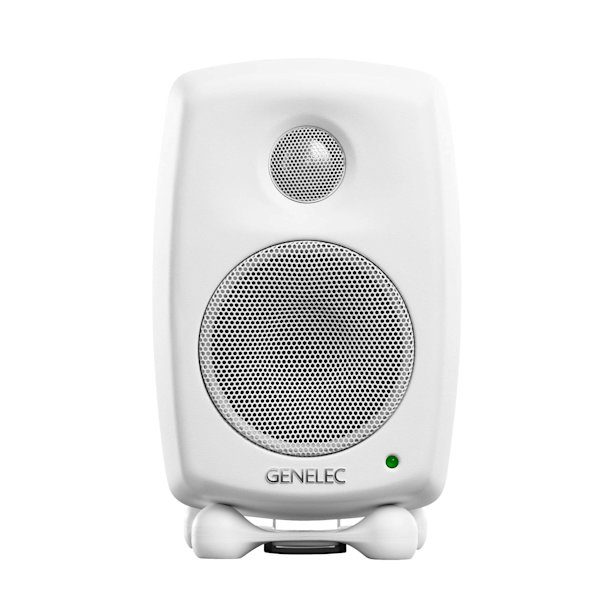
When you pull the Genelec 8010A out of the box, the first thing that hits you is the density. These aren't the hollow, plastic-feeling desktop speakers you find at big-box retailers. They are encased in rugged die-cast aluminum that feels like it could survive a drop from a stage rig—because, frankly, it probably could. As Drew Brashler noted, you can fit a pair into a standard Pelican 1510 case, making these the gold standard for traveling engineers who refuse to compromise on their reference audio.
Living with these on a desk for a year changes how you view workspace real estate. Because they are so compact, they disappear into your setup, leaving you with more room for your keyboard, mouse, and actual work. The built-in Iso-Pod stand is a stroke of genius; it decouples the speaker from your desk surface to stop vibrations from turning your workspace into a rattle-trap, and it lets you tilt the drivers directly toward your ears.
The sound profile is surgical. As OUTHABOX studios put it, "The sound you get is just otherworldly, it's really incredible." You aren't getting a "fun" or "hyped" sound here. You’re getting a flat, honest representation of your audio. While you won't be shaking the floorboards with sub-bass—physics dictates that a 3-inch woofer has limits—the clarity in the mid-range and the high-frequency detail is startling for something this small.
Performance — what reviewers actually measured
Don't let the size fool you. These are serious tools, not lifestyle accessories. Here is how they stack up in a real-world environment:
| Metric | Value | Context |
|---|---|---|
| Max SPL | 96 dB | Plenty for near-field monitoring |
| Weight | 3.5 lbs | Highly portable |
| Low-end Roll-off | ~70Hz | Needs a sub for full-range mixing |
| Amplification | 25W + 25W | Efficient Class D bi-amping |
Where it actually wins
The 8010A wins on sheer utility. The Intelligent Signal Sensing (ISS) is a feature you’ll grow to love; it puts the monitors into a low-power standby mode when you aren't playing audio, meaning you don't have to reach behind the speakers to flip a power switch every time you walk away from your desk.
The room correction dip switches on the back are another massive win. If you’re forced to place these against a wall or in a corner, the boundary compensation settings actually work. They allow you to dial back the bass buildup that usually plagues small rooms, keeping your mix from becoming a muddy mess. It’s a level of professional control that most desktop speakers simply ignore.
Where it falls short
It isn't all perfect. The rear-facing XLR connection is a notorious pain point. Because the port is recessed and tight against the back panel, you will almost certainly need to buy angled XLR cables to keep your desk setup clean. If you try to use standard straight-end cables, you’ll find yourself pushing the speakers further out into your workspace than you’d like.
Furthermore, the lack of a front-facing volume knob is a frustration you’ll feel daily. You’re forced to rely on input sensitivity switches on the back or control your volume entirely through your interface or computer software. If you’re the type of person who likes to make quick, tactile adjustments to your listening level, this workflow will feel restrictive. Finally, if you are a producer working on bass-heavy electronic music, you will find the 70Hz roll-off limiting. You’ll eventually need to pair these with a subwoofer, which adds significant cost and complexity to your setup.
Should you buy it?
Buy if you
- Value desk space above all else and need a clean, minimalist aesthetic.
- Are a traveling producer or engineer who needs consistent reference audio on the road.
- Need professional-grade accuracy for critical listening or broadcast work.
- Appreciate "buy it for life" build quality in a compact package.
Skip if you
- Produce bass-heavy genres and don't have the budget or space for a dedicated subwoofer.
- Prefer a tactile, front-mounted volume knob for quick adjustments.
- Are looking for a budget-friendly entry-level speaker; these are a premium investment.
The Genelec 8010A delivers uncompromising, professional-grade audio precision in a form factor small enough to fit in a carry-on.
Sources consulted
- DSAUDIOreview — Genelec 8010A (Genelec G One) vs Yamaha HS5 || Sound Demo w/ Bass Test
- OUTHABOX studios — Genelec 8010 Studio Monitor Review and Quick look Best Small Studio Monitors?
- Mad Steex — Small BUT Precise Studio Monitors | Genelec 8020D
- Drew Brashler — Why the Genelec 8010A Is Perfect for FOH & Broadcast (X32 Control Room Setup)
Synthesis combines independent reviews above. Verdicts and quotes attributed to original creators. Affiliate disclosure: we may earn a commission from qualifying purchases via Amazon links.
Products covered in this review
Frequently Asked Questions
Is the Genelec 8010A worth buying?
While you won't get earth-shattering sub-bass from a 3-inch woofer, the clarity, build quality, and room-correction features are unmatched in this size class. They are the ultimate solution for traveling producers, broadcast desks, and ultra-compact home studios.
Who is the Genelec 8010A best for?
Traveling producers, front-of-house engineers, and musicians with extremely limited desk space.
Who should skip it?
Bass-heavy electronic producers without a subwoofer, or those looking for budget entry-level monitors.