 HiFiRated
Focusrite Scarlett Solo (4th Gen) Review — A legendary beginner interface fixes its biggest physical design flaws while quietly packing in professional-grade preamp power under the hood
TL;DR
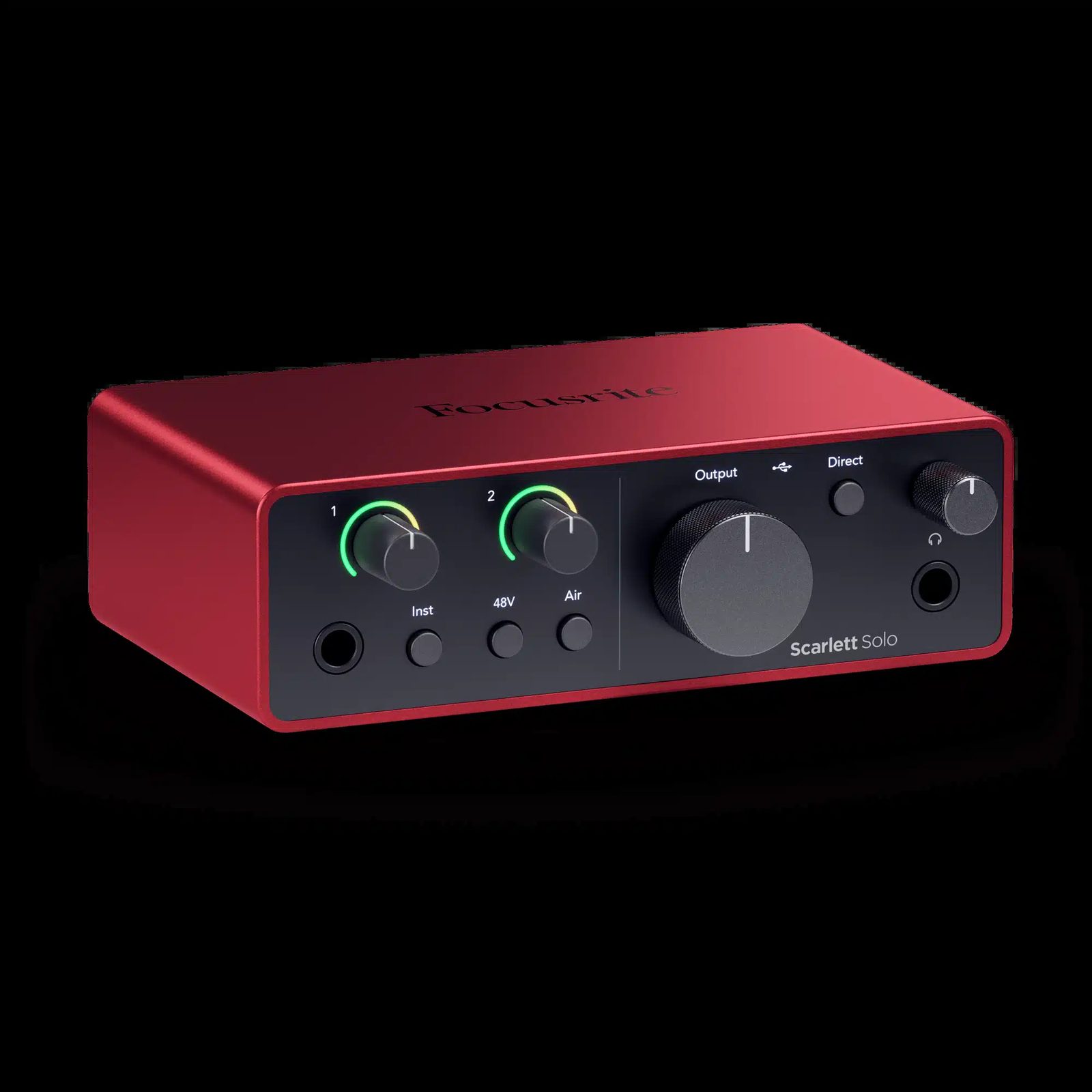
Focusrite finally addressed the biggest gripes of previous generations by adding separate headphone/monitor controls and moving the XLR to the back. The upgraded preamps provide enough clean gain to run notoriously quiet mics without expensive inline boosters, making it an incred
Verdict: Buy
What people are saying
Sources disclosed below
Reviewer Verdicts
Avg of 4 video reviews
Sanjay C, Podcastage, Julian Krause…
Reddit Discussion
Across 50 threads in r/homerecording, r/audioengineering, r/audiophile
Sentiment summary, not a rating
Pros
- +Massive preamp gain upgrade (69dB) easily drives gain-hungry mics like the SM7B without a Cloudlifter
- +Addition of separate volume knobs for headphones and studio monitors
- +Rear-facing XLR input vastly improves desk cable management
- +Two distinct 'Air' modes (Presence, and Presence + Drive) add pleasing analog character
- +Native loopback audio support is now built-in
- +Excellent build quality with improved, highly visible LED metering
Cons
- −The highly advertised Auto Gain and Clip Safe features are completely missing from the Solo model
- −Air mode is restricted to the mic input and cannot be applied to instruments
- −Slight high-frequency roll-off when the preamp is pushed to absolute maximum gain
Jordan Kim
Published May 2, 2026
$119–$139
Price may vary. Updated regularly.
Focusrite's newest entry-level interface packs enough clean preamp power to make your expensive Cloudlifter completely obsolete. If you’ve spent the last few years wrestling with noisy gain stages or cluttering your desk with inline boosters just to get a decent signal from a Shure SM7B, the 4th Gen Scarlett Solo is the hardware intervention you’ve been waiting for.
What you're actually getting
After living with the Scarlett Solo 4th Gen for a while, it’s clear that Focusrite stopped trying to reinvent the wheel and started listening to the people actually using it. The most immediate change is the physical layout. Moving the XLR input to the rear of the unit is a massive quality-of-life win that finally cleans up the cable spaghetti on my desk. It’s a small change, but it makes the interface feel like a permanent part of your workspace rather than a temporary dongle you’re constantly tripping over.
Under the hood, this is a serious technical upgrade. The preamp gain has been pushed to a staggering 69dB. As Podcastage noted, "This thing has plenty of gain even for the SM7B without a FetHead or a Cloudlifter." That isn't just marketing fluff; it’s a tangible reduction in your gear budget. You’re getting a clean, quiet signal that holds its own against interfaces twice the price.
However, Focusrite isn't giving everything away for free. The company clearly gated some of the "smart" features—specifically Auto Gain and Clip Safe—to the more expensive 2i2 and 4i4 models. It’s a frustrating upsell tactic that leaves the Solo feeling slightly less "intelligent" than its siblings. If you’re a set-it-and-forget-it type of user, you won't miss them, but if you were hoping for the full suite of 4th Gen automation, you’re going to be disappointed.
Performance — what reviewers actually measured
The technical specs here aren't just numbers on a box; they represent a genuine leap in performance for a sub-$150 device.
| Metric | Value | Context |
|---|---|---|
| Preamp Gain Range | 69 dB | Drives SM7B/RE20 easily |
| Dynamic Range | 113 dBA | Professional-tier clarity |
| Preamp EIN | -127 dBuA | Extremely low noise floor |
Where it actually wins
The standout feature is undoubtedly the preamp performance. Achieving a -127 dBuA noise floor at this price point is impressive, and the fact that the Solo actually outperforms the 4th Gen 2i2 and 4i4 by about two decibels—as Julian Krause pointed out—is a bizarre but welcome quirk. You’re getting the cleanest signal in the entire 4th Gen lineup in the smallest, cheapest package.
The "Air" mode has also been refined. It’s no longer just a simple high-frequency boost; you now get two distinct flavors: Presence, and Presence + Drive. It adds a subtle, analog-style harmonic saturation that makes vocals feel "finished" before you even touch a plugin. Combined with the new, highly visible LED metering, you have a much better sense of your levels at a glance, which saves you from the dreaded digital clipping that ruins a perfect take.
Where it falls short
The biggest strike against the Solo is the artificial feature gap. By omitting Auto Gain and Clip Safe, Focusrite forces you to choose between a compact desk footprint and the convenience of smart leveling. It’s a classic "pick your poison" scenario that feels unnecessary in 2024.
Additionally, the Air mode is strictly limited to the microphone input. If you’re a guitarist looking to add that same analog character to your DI signal, you’re out of luck. It’s a software-side restriction that feels like a missed opportunity. Finally, while the preamps are stellar, don't expect perfection at the absolute limit. If you crank the gain to 100%, you will encounter a slight high-frequency roll-off. It’s negligible for most voiceover or podcasting work, but it’s a reminder that this is still an entry-level interface, not a high-end studio console.
Should you buy it?
Buy if you
- Use a gain-hungry dynamic microphone like the Shure SM7B or Electro-Voice RE20.
- Value a clean desk and want your XLR cable tucked away at the back.
- Need a reliable, low-noise interface for streaming or solo podcasting.
- Want the best preamp performance in the Scarlett lineup without paying for extra inputs you won't use.
Skip if you
- Already own a 3rd Gen Scarlett and your current setup is working fine.
- Are a beginner who desperately wants the "Auto Gain" feature to handle your levels for you.
- Need to record multiple instruments or mics simultaneously.
The Scarlett Solo 4th Gen delivers professional-grade preamp power and crucial quality-of-life design fixes, cementing its status as the ultimate beginner interface.
Sources consulted
- Sanjay C — Focusrite Scarlett 4th Gen Review - EVERYTHING you need to know
- Podcastage — Focusrite Scarlett 2i2 (4th Gen) USB Audio Interface Review / Explained
- Julian Krause — Focusrite Scarlett Solo 4th Gen – USB Audio Interface Review (Air Mode Audio Samples)
- Chris Tarroza Music — Focusrite Scarlett Solo 4th vs. 3rd Gen | Worth the Upgrade?
Synthesis combines independent reviews above. Verdicts and quotes attributed to original creators. Affiliate disclosure: we may earn a commission from qualifying purchases via Amazon links.
Products covered in this review
Frequently Asked Questions
Is the Focusrite Scarlett Solo (4th Gen) worth buying?
Focusrite finally addressed the biggest gripes of previous generations by adding separate headphone/monitor controls and moving the XLR to the back. The upgraded preamps provide enough clean gain to run notoriously quiet mics without expensive inline boosters, making it an incredible value. However, the omission of Auto Gain and Clip Safe on the Solo model is a frustrating upse
Who is the Focusrite Scarlett Solo (4th Gen) best for?
Solo musicians, beginner podcasters, and streamers who need a clean, powerful single-mic setup without buying external inline preamps.
Who should skip it?
Current 3rd Gen owners whose setups are already working fine, or creators who want smart features like Auto Gain (who should buy the 2i2 instead).