 HiFiRated
Focusrite Scarlett 4i4 (4th Gen) Review — An industry standard refuses to rest on its laurels, delivering a massive generational leap in preamp quality and smart features
TL;DR
With 69dB of gain, Auto Gain, and Clip Safe, the 4i4 eliminates the need for external inline preamps and takes the guesswork out of setting levels. While it requires external power on older USB ports and lacks a second headphone jack, the massive leap in audio quality makes it a
Verdict: Buy
What people are saying
Sources disclosed below
Reviewer Verdicts
Avg of 4 video reviews
Sanjay C, Julian Krause, Butler CNC (Joshua Butler)…
Reddit Discussion
Across 50 threads in r/homerecording, r/audioengineering, r/audiophile
Sentiment summary, not a rating
Pros
- +Massively improved RedNet-derived preamps with 69dB of gain, easily driving power-hungry mics like the SM7B
- +Auto Gain and Clip Safe features act like a virtual engineer to prevent ruined takes
- +Two new Air modes (Presence, and Presence + Drive) add pleasing analog-style saturation and EQ
- +Excellent, tank-like metal build quality
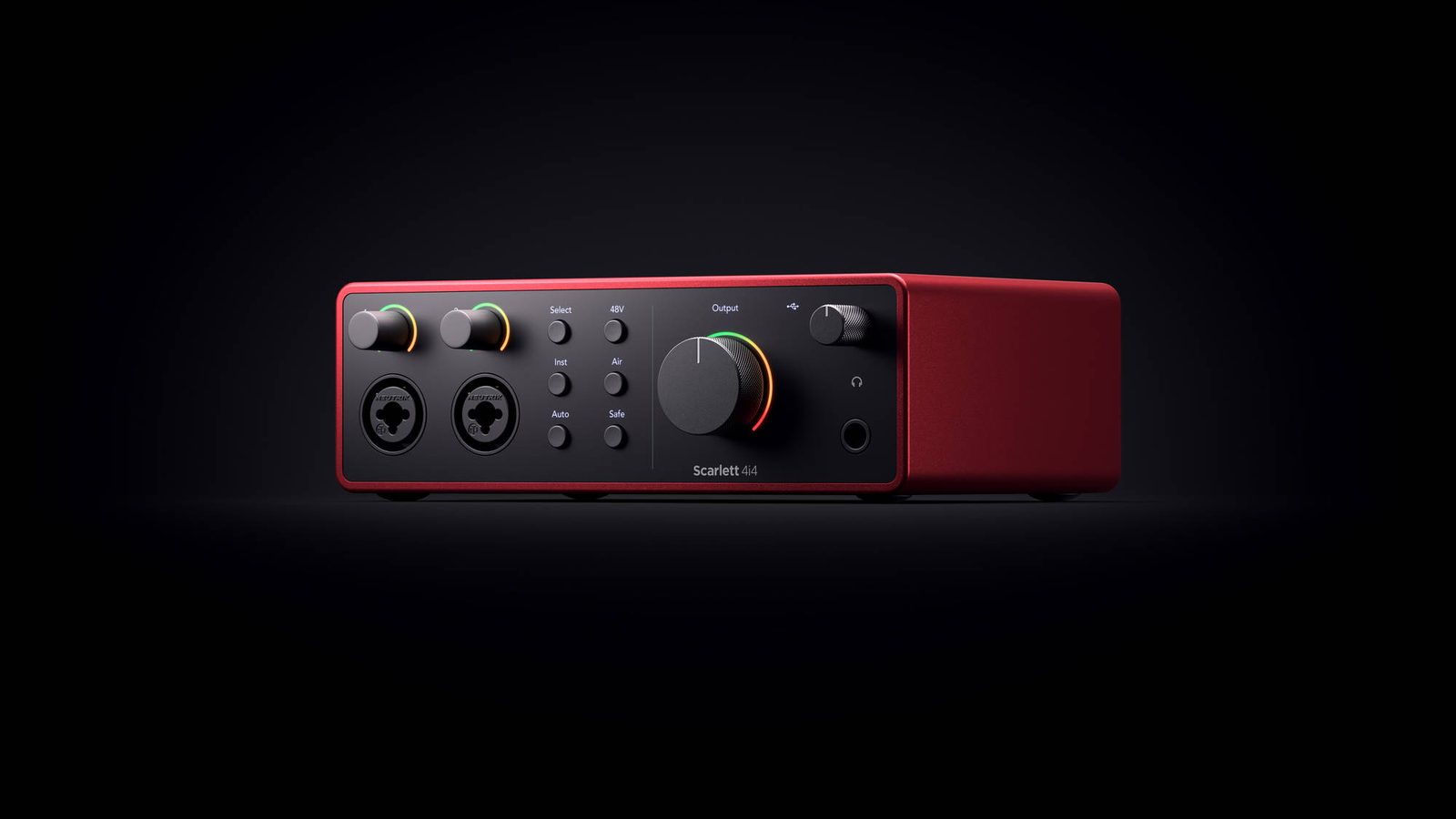
- +LED halo meters around the knobs provide highly visible, real-time level feedback
- +Inclusion of MIDI I/O for outboard synths and electronic drum kits
Cons
- −Air mode effects are baked directly into the recording and cannot be undone in post-production
- −USB power requirements are demanding and often require the included external power supply on laptops
- −Only features a single headphone output, which is frustrating for collaborative sessions
- −Lacks the physical direct monitoring button found on the smaller 2i2 model, requiring software control instead
Jordan Kim
Published May 2, 2026
$219–$259
Price may vary. Updated regularly.
Focusrite's newest budget interface packs flagship preamps that finally make the Cloudlifter obsolete. If you’ve spent the last decade fighting to get a clean signal out of a Shure SM7B without a mountain of noise, the 4th Gen Scarlett 4i4 is the upgrade you’ve been waiting for.
What you're actually getting
After using the 4th Gen 4i4 for a few weeks, it’s clear that Focusrite stopped playing it safe. The headline here is the preamp quality. With 69dB of gain on tap, you no longer need to chain external inline preamps just to get a usable signal from gain-hungry dynamic microphones. It’s a clean, quiet, and surprisingly robust gain stage that feels like a massive jump from the 3rd Gen. As Producer Hive aptly put it, "It's like having your own personal little studio engineer inside this little red box riding the fader."
The "smart" features—Auto Gain and Clip Safe—are the real game-changers for anyone who isn't a professional sound engineer. Auto Gain sets your levels in seconds, and Clip Safe acts as a brick-wall limiter that prevents your digital signal from distorting if you suddenly get too loud. It’s essentially insurance against ruined takes. The build quality also feels like a step up; it’s a dense, metal-chassis unit that feels like it could survive a drop off your desk without a scratch.
However, don't mistake this for a perfect device. Focusrite made some baffling design choices that might trip you up if you’re used to older interfaces. The lack of a physical direct monitoring button means you’re forced into the software control panel for basic tasks, which is a nuisance when you just want to hear yourself without latency. And while the new Air modes add some nice analog-style character, they are baked into the signal. If you record with the "Presence + Drive" mode engaged, you are stuck with that sound forever.
Performance — what reviewers actually measured
The technical specs tell the story of a device that punches well above its $250 price point.
| Metric | Value | Context |
|---|---|---|
| Preamp Gain | 69 dB | Enough for SM7B without extra gear |
| Air Mode (Presence) | +4 dB boost | Subtle high-end lift |
| Air Mode (Drive) | +6 dB boost | Aggressive saturation |
| Converters | Cirrus Logic | Flagship-grade conversion |
Where it actually wins
The 4i4 wins by solving the two biggest headaches in home recording: gain staging and level management. The inclusion of MIDI I/O is a massive win for those of us with hardware synths or electronic drum kits, turning this from a simple mic interface into a legitimate hub for a home studio.
The LED halo meters are another highlight. Instead of squinting at a tiny screen or a software window, you get immediate, color-coded feedback right on the gain knobs. It’s intuitive, bright, and saves you from having to constantly check your DAW to see if you’re peaking. When you’re in the middle of a creative flow, having that visual confirmation right at your fingertips is invaluable.
Where it falls short
The biggest frustration is the "baked-in" nature of the Air modes. While the saturation sounds great, it’s a high-risk, high-reward feature. As Julian Krause noted, the "Presence + Drive" setting applies a very aggressive V-shape EQ that can easily ruin a vocal take if you aren't careful. Since you can't undo this in post-production, you’re essentially committing to a specific sound before you’ve even finished the performance.
Then there’s the power issue. This interface is power-hungry. If you’re running it off a laptop’s USB port, you’ll likely need to use the included external power supply, which adds more cable clutter to your workspace. It’s also a shame that Focusrite limited the 4i4 to a single headphone output. If you’re recording a podcast guest or a collaborator, you’re going to need a separate headphone amp or a splitter, which feels like a missed opportunity for a device marketed toward creators.
Should you buy it?
Buy if you
- Use gain-hungry dynamic mics like the SM7B or RE20.
- Need MIDI I/O for external synths or drum machines.
- Want "set it and forget it" features like Auto Gain to speed up your workflow.
- Value high-quality converters that provide a transparent, professional sound.
Skip if you
- Need to record more than two microphones at once.
- Frequently record with a partner and need dual headphone outputs.
- Prefer to have total control over your EQ and saturation in post-production rather than printing effects.
The 4th Gen Scarlett 4i4 brings flagship-level preamps and foolproof recording features to the budget interface market.
Sources consulted
- Sanjay C — Focusrite Scarlett 4th Gen Review - EVERYTHING you need to know
- Julian Krause — Focusrite Scarlett 4i4 4th Gen – USB Audio Interface Review (new AIR mode!!)
- Butler CNC (Joshua Butler) — Focusrite Scarlett 4i4 4th Gen Review | Sound Test - Pros And Cons @zZoundsMusic
- Producer Hive — Focusrite Scarlett 4th Gen Review (Worth It?)
Synthesis combines independent reviews above. Verdicts and quotes attributed to original creators. Affiliate disclosure: we may earn a commission from qualifying purchases via Amazon links.
Products covered in this review
Frequently Asked Questions
Is the Focusrite Scarlett 4i4 (4th Gen) worth buying?
With 69dB of gain, Auto Gain, and Clip Safe, the 4i4 eliminates the need for external inline preamps and takes the guesswork out of setting levels. While it requires external power on older USB ports and lacks a second headphone jack, the massive leap in audio quality makes it a top-tier choice.
Who is the Focusrite Scarlett 4i4 (4th Gen) best for?
Home studio producers, podcasters using gain-hungry dynamic mics, and musicians needing MIDI I/O and outboard gear routing.
Who should skip it?
Drummers or bands needing to record more than two microphones simultaneously, or users who want dual headphone outputs.