 HiFiRated
Focusrite Scarlett 2i2 (4th Gen) Review — An already iconic beginner interface gets a flagship-level internal overhaul, proving that budget gear doesn't have to sound cheap
TL;DR
Focusrite didn't just give the 2i2 a cosmetic facelift; they overhauled the preamps, added flagship-level converters, and introduced foolproof features like Auto Gain and Clip Safe. The massive 69dB of gain eliminates the need for expensive inline preamps for dynamic mics. While
Verdict: Buy
What people are saying
Sources disclosed below
Reviewer Verdicts
Avg of 4 video reviews
Sanjay C, Chris Green | Home Studio Producer, Podcastage…
Reddit Discussion
Across 50 threads in r/homerecording, r/audioengineering, r/audiophile
Sentiment summary, not a rating
Pros
- +Massive 69dB gain range easily drives gain-hungry dynamic mics like the Shure SM7B without external lifters
- +XLR inputs moved to the back for significantly better cable management and a cleaner desk setup
- +Upgraded RedNet converters provide noticeably better audio quality, clarity, and dynamic range
- +New Air modes (Presence and Drive) add pleasing analog-style EQ and harmonic saturation
- +Auto Gain and Clip Safe features work flawlessly to prevent ruined takes for beginners
- +Infinite digital gain knobs allow for seamless software control and remote adjustments
Cons
- −Phantom power (48V) applies to both inputs simultaneously rather than having independent toggles
- −Despite having four physical input ports, you can still only record a maximum of two channels at once
- −Plugging an instrument into the front inputs completely overrides the rear XLR inputs
Jordan Kim
Published May 2, 2026
$169–$199
Price may vary. Updated regularly.
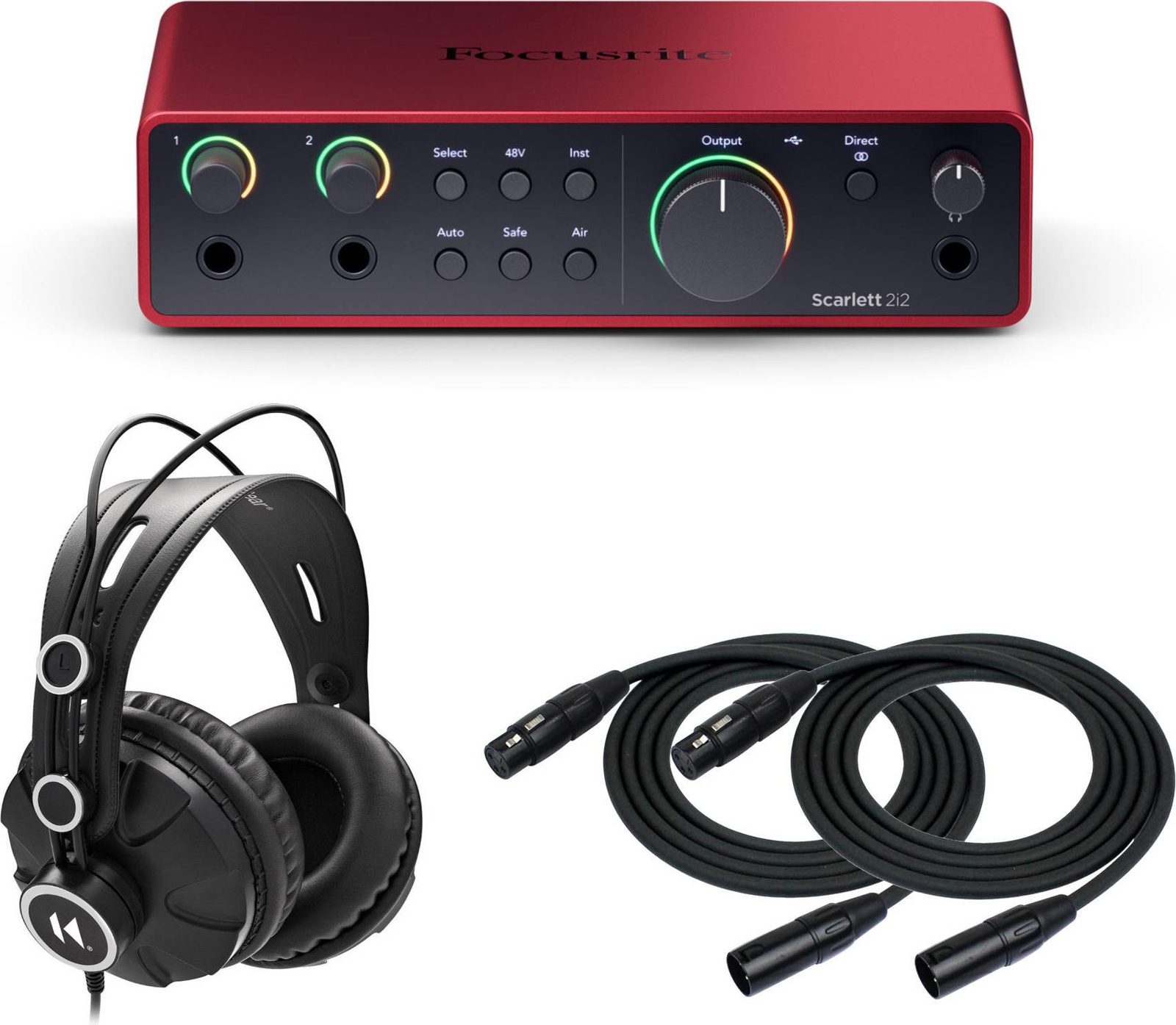
Focusrite's newest budget interface packs enough preamp power to make your Cloudlifter completely obsolete. For years, the Scarlett series has been the default "starter" box for home studios, but the 4th Gen 2i2 finally stops playing it safe and starts competing with gear twice its price.
What you're actually getting
If you’ve been using a 2nd or 3rd Gen Scarlett, the 4th Gen feels like a different animal entirely. Focusrite didn't just slap a new coat of paint on the chassis; they gutted the internals and replaced them with RedNet-derived converters. The result is a noise floor so low it’s practically invisible, and a gain range that finally puts the "I need a booster for my SM7B" debate to bed. As Podcastage noted, "This thing has plenty of gain even for the SM7B without a FetHead or a Cloudlifter." That’s a massive win for your wallet and your cable clutter.
The physical design shift is the most immediate change you'll notice on your desk. By moving the XLR inputs to the back, Focusrite has finally acknowledged that most of us don't want a spaghetti mess of cables draped across our keyboards. It makes the unit feel like a permanent, professional fixture rather than a temporary dongle. While some reviewers like Reid Stefan appreciated the slightly beefier, more robust footprint, the real star is the workflow.
The new software-integrated features—specifically Auto Gain and Clip Safe—are genuine game-changers for anyone who has ever ruined a perfect take by peaking into the red. It’s not just marketing fluff; it’s a safety net that works. As Reid Stefan put it, "The new features in this interface really do make it almost impossible to mess up your recordings." You’re getting a device that acts as a co-pilot, letting you focus on the performance rather than staring at gain meters.
Performance — what reviewers actually measured
The numbers don't lie, and they paint a picture of an interface that punches well above its $199 weight class.
| Metric | Value | Context |
|---|---|---|
| Preamp Gain | 69 dB | Drives gain-hungry mics easily |
| Preamp EIN | -127 dBuA | Extremely low noise floor |
| Clip Safe Rate | 96k/sec | Prevents digital distortion |
| Headphone Amp | 300 ohm | Powers high-end studio cans |
Where it actually wins
The 4th Gen 2i2 wins because it solves the "beginner friction" problem. The Auto Gain feature is the highlight here; it listens to your input for ten seconds and sets the perfect level, which is a godsend for solo podcasters or musicians who don't have an engineer in the room.
The new "Air" modes—Presence and Drive—are also surprisingly usable. Unlike the gimmicky EQ presets of the past, these add genuine harmonic saturation that can make a dull dynamic mic sound polished before you even touch a plugin. It’s the kind of "instant gratification" that makes the creative process feel faster and more rewarding. Plus, the loopback functionality is baked in, making it a plug-and-play solution for streamers who need to route system audio into their broadcast software without jumping through virtual cable hoops.
Where it falls short
It isn't a perfect device. The most glaring oversight is the shared phantom power. If you’re running a condenser mic on one input and a ribbon mic on the other, you’re out of luck—you have to toggle 48V for both or neither. It’s a frustrating limitation that feels like a relic of the budget-tier design.
Additionally, the input priority logic can be annoying. If you have your XLR mics plugged into the back and you accidentally plug a guitar into the front, the interface kills the rear signal. It’s a "smart" feature that feels like a nuisance if you’re prone to leaving cables plugged in. Finally, despite the four physical ports, you are still limited to two simultaneous channels of recording. If you’re looking to record a drum kit or a full band, this isn't the unit for you—it’s a two-channel workhorse, and it refuses to be anything else.
Should you buy it?
Buy if you
- Use gain-hungry microphones like the Shure SM7B or MV7.
- Want a clean, professional-looking desk setup with rear-facing inputs.
- Are a solo creator who needs "set it and forget it" features like Auto Gain.
- Value high-quality, low-noise preamps that don't require external hardware.
Skip if you
- Need to record more than two channels at once.
- Require independent phantom power for mixed microphone setups.
- Are already invested in a high-end interface and are looking for a significant "pro" upgrade.
The 4th Gen Scarlett 2i2 is a massive leap forward that sets a new standard for budget audio interfaces.
Sources consulted
- Sanjay C — Focusrite Scarlett 4th Gen Review - EVERYTHING you need to know
- Chris Green | Home Studio Producer — Focusrite Scarlett 2i2 (4th Gen) Full Guide – Features, Software & Setup!
- Podcastage — Focusrite Scarlett 2i2 (4th Gen) USB Audio Interface Review / Explained
- Reid Stefan — Focusrite Scarlett 2i2 4th Gen | Audio Interface Review & Sound Quality Test
Synthesis combines independent reviews above. Verdicts and quotes attributed to original creators. Affiliate disclosure: we may earn a commission from qualifying purchases via Amazon links.
Products covered in this review
Frequently Asked Questions
Is the Focusrite Scarlett 2i2 (4th Gen) worth buying?
Focusrite didn't just give the 2i2 a cosmetic facelift; they overhauled the preamps, added flagship-level converters, and introduced foolproof features like Auto Gain and Clip Safe. The massive 69dB of gain eliminates the need for expensive inline preamps for dynamic mics. While the shared phantom power is a slight annoyance, the overall value and audio quality make it an absol
Who is the Focusrite Scarlett 2i2 (4th Gen) best for?
Beginners, podcasters, and home studio musicians looking for foolproof recording and enough gain to drive any microphone.
Who should skip it?
Users who need to record more than two simultaneous tracks or require independent phantom power for mixed microphone setups.