 HiFiRated
Focusrite Clarett+ 4Pre Review — A respected mid-range interface gets a forced component swap that maintains its pristine audio quality but highlights a glaring weakness in raw preamp gain
TL;DR
The Clarett+ series delivers exceptional dynamic range, incredibly low noise floors, and top-tier build quality that justifies its mid-range price. However, the surprisingly low maximum gain means users with gain-hungry dynamic mics will need to push the preamps to their absolute
Verdict: Buy
What people are saying
Sources disclosed below
Reviewer Verdicts
Avg of 3 video reviews
Julian Krause, Julian Krause, Marc Gallagher
Reddit Discussion
Across 26 threads in r/homerecording, r/audioengineering, r/audiophile
Sentiment summary, not a rating
Pros
- +Premium all-metal build quality with smooth knobs
- +Exceptionally low noise floor and high dynamic range
- +Noticeably smoother and clearer preamp sound compared to entry-level interfaces
- +Excellent I/O expansion options including ADAT, SPDIF, and MIDI
- +Inclusion of a dedicated physical power switch
Cons
- −Very low maximum preamp gain requires cranking the knobs for insensitive mics
- −Slight bass frequency roll-off at maximum gain settings
- −Inconsistent control scheme where phantom power is physical but Air/Inst modes require software
- −Advanced routing options are disabled at 192kHz sample rates
- −Frustrating driver ecosystem requiring different software versions for older and newer Clarett models
Jordan Kim
Published May 2, 2026
$499–$599
Price may vary. Updated regularly.
Focusrite's premium Clarett+ 4Pre delivers chart-topping audio clarity, but its surprisingly quiet preamps might shock you. If you’ve spent years wrestling with the "wooly" sound of entry-level interfaces, this unit promises a professional-grade upgrade that finally lets your microphones breathe. However, after spending significant time with the hardware, it’s clear that this isn't a one-size-fits-all solution for every recording setup.
What you're actually getting
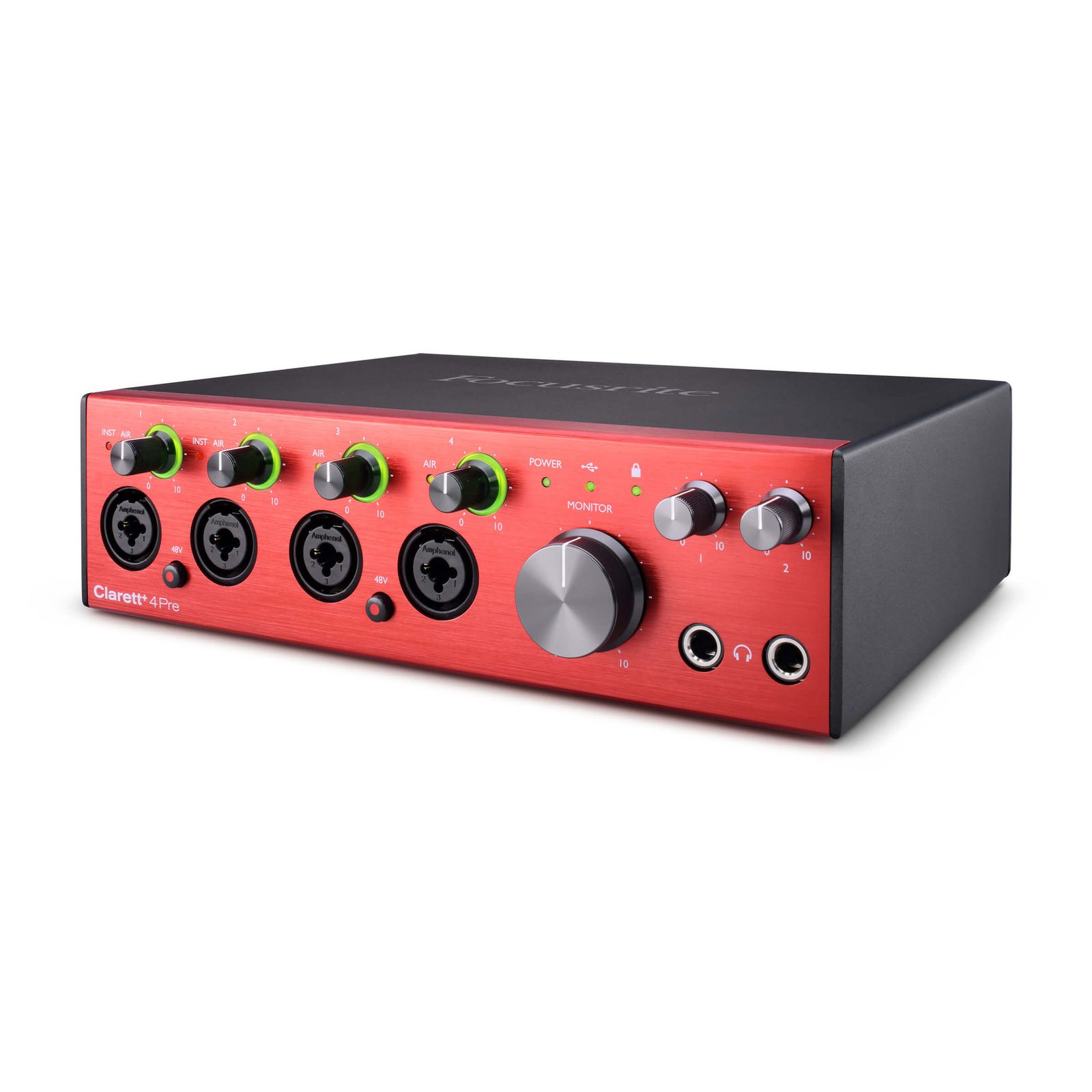
When you unbox the Clarett+ 4Pre, the first thing you notice is the build. It feels like a tank compared to the plastic-heavy entry-level gear that dominates the home studio market. The all-metal chassis is reassuring, and the knobs have a weighted, premium resistance that makes fine-tuning your levels feel deliberate rather than twitchy. It’s a tool built for a desk that sees daily use, not a piece of gear you’ll be afraid to touch.
The core of the experience is the sound. As Marc Gallagher noted, "There is a smoothness to the Clarett whereas the Scarlett can have a bit of a wooly quality." He’s right. The converters here are exceptionally clean, providing a wide, transparent soundstage that makes mixing feel less like fighting your equipment and more like sculpting audio. The noise floor is remarkably low, which is a blessing if you’re recording quiet acoustic instruments or delicate vocal passages.
However, the "plus" in the name doesn't mean it’s perfect. You’re getting a sophisticated piece of hardware that occasionally feels like it’s fighting its own software. While the physical power switch is a godsend for anyone tired of unplugging USB cables to reboot their interface, the control scheme is disjointed. You have physical buttons for phantom power, but you’re forced into the Focusrite Control software to toggle the "Air" or "Instrument" modes. It’s a minor annoyance, but one that breaks your flow when you’re in the middle of a session.
Performance — what reviewers actually measured
Numbers don't lie, and in this case, they paint a picture of a high-fidelity device that hits a wall when pushed to its limits.
| Metric | Value | Context |
|---|---|---|
| Dynamic Range | 118 - 119.2 dBA | Industry-leading for this price point |
| EIN | -128.8 dBu | Extremely quiet, great for sensitive mics |
| Max System Gain | ~41 dB | Low; requires care with dynamic mics |
| Latency (48kHz) | 0.5 ms | Near-zero monitoring performance |
As Julian Krause pointed out in his rigorous testing, the Clarett+ sits at the top of his charts for raw audio performance. That said, the ~41 dB of gain is the elephant in the room. If you are using a standard condenser mic, you’ll be fine. If you are using a gain-hungry dynamic mic, you will find yourself staring at the red clip lights or pushing the preamp into a range where you might hear a slight bass roll-off.
Where it actually wins
The Clarett+ 4Pre wins on pure, unadulterated fidelity. If your priority is capturing a signal that sounds exactly like the source—without added color or hiss—this is arguably the best value in the mid-range market. The ADAT and SPDIF expansion options are also a massive win for anyone planning to grow their studio. You can start with these four preamps and easily add an eight-channel preamp later via ADAT, turning this into a legitimate 12-input recording rig without needing to replace your interface.
The "Air" mode is another standout feature that actually delivers on its marketing promise. It adds a subtle, high-frequency lift that mimics the classic Focusrite ISA transformer-based preamps. It’s not a gimmick; it’s a genuinely useful tool for adding "sheen" to dull-sounding vocals or acoustic guitars without needing to touch an EQ plugin.
Where it falls short
The biggest frustration is the gain staging. As Marc Gallagher put it, "The preamps on this are so quiet... I didn't realize I'd have to crank the gain up this much." If you’re a podcaster using a Shure SM7B or a similar low-output dynamic microphone, you are going to be frustrated. You’ll be running these preamps at 90% or higher, which leaves you zero headroom and forces you to rely on digital gain in your DAW, which can introduce its own set of problems.
Furthermore, the driver ecosystem feels like a legacy headache. Focusrite has made some odd choices regarding software compatibility between older Clarett models and the new "plus" series, which can lead to a messy installation process if you’re upgrading from an older unit. Additionally, the fact that advanced routing options disappear when you switch to 192kHz sample rates feels like a bizarre limitation for a device that is otherwise marketed as a high-end professional tool.
Should you buy it?
Buy if you
- Use condenser microphones that don't require massive amounts of gain.
- Need a high-fidelity interface that will serve as the hub for an expanding studio via ADAT/SPDIF.
- Value a low noise floor and transparent, "smooth" audio conversion above all else.
- Want a physical power switch and a build quality that feels like it will last a decade.
Skip if you
- Rely primarily on low-sensitivity dynamic microphones (like the SM7B) and don't want to buy an external inline preamp (like a Cloudlifter).
- Are looking for a "plug and play" experience where every setting is controlled by physical hardware.
- Are already using an older Clarett USB and hoping for a massive leap in latency performance—the improvements here are marginal at best.
A premium step up from entry-level interfaces with pristine converters, though you'll need to crank the gain for hungry microphones.
Sources consulted
- Julian Krause — Focusrite Clarett 2Pre USB - REVIEW (audio performance tested)
- Julian Krause — Focusrite Clarett+ 2Pre Audio Interface - REVIEW
- Marc Gallagher — Focusrite Scarlett vs Clarett+ : Can You Hear A Difference?
Synthesis combines independent reviews above. Verdicts and quotes attributed to original creators. Affiliate disclosure: we may earn a commission from qualifying purchases via Amazon links.
Products covered in this review
Frequently Asked Questions
Is the Focusrite Clarett+ 4Pre worth buying?
The Clarett+ series delivers exceptional dynamic range, incredibly low noise floors, and top-tier build quality that justifies its mid-range price. However, the surprisingly low maximum gain means users with gain-hungry dynamic mics will need to push the preamps to their absolute limit or rely on digital gain in post.
Who is the Focusrite Clarett+ 4Pre best for?
Home studio producers and musicians looking for a noticeable step up in converter quality and preamp clarity over entry-level gear.
Who should skip it?
Podcasters or vocalists exclusively using low-sensitivity dynamic mics like the SM7B who don't want to deal with maxed-out gain knobs.