 HiFiRated
Etymotic ER4XR Review — A legendary, utilitarian studio tool gets a consumer-friendly bass bump, but retains its famously invasive fit
TL;DR
If you can stomach the deep triple-flange insertion, you are rewarded with audio resolution that rivals $1,000 monitors and isolation that beats ANC. However, the physical discomfort, cable microphonics, and utilitarian design make them a tough sell for casual daily listening.
Verdict: Depends on Use Case
What people are saying
Sources disclosed below
Reviewer Verdicts
Avg of 4 video reviews
Linus Tech Tips, lachlanlikesathing, Super* Review…
Reddit Discussion
Across 75 threads in r/iems, r/headphones, r/HeadphoneAdvice
Sentiment summary, not a rating
Pros
- +Incredible detail retrieval and clarity that competes with much more expensive IEMs
- +Unmatched passive noise isolation that rivals or beats active noise cancellation
- +Tasteful sub-bass boost (XR model) that adds punch without muddying the mid-range
- +Durable, utilitarian build quality with a detachable MMCX cable
Cons
- −Extremely deep, invasive fit that is intimidating and uncomfortable for many users
- −Noticeable cable microphonics (noise) when the wire rubs against clothing
- −Poorly marked Left/Right indicators that are hard to see in low light
- −The 5-foot cable is unusually long and can be unwieldy for mobile use
Jordan Kim
Published May 3, 2026
These $350 earphones rival $1,000 flagships in detail, but wearing them feels like a medical procedure. If you’re looking for a comfortable, "pop-in-and-go" experience, keep walking; the Etymotic ER4XR is a surgical instrument that demands total submission from your ear canals.
What you're actually getting
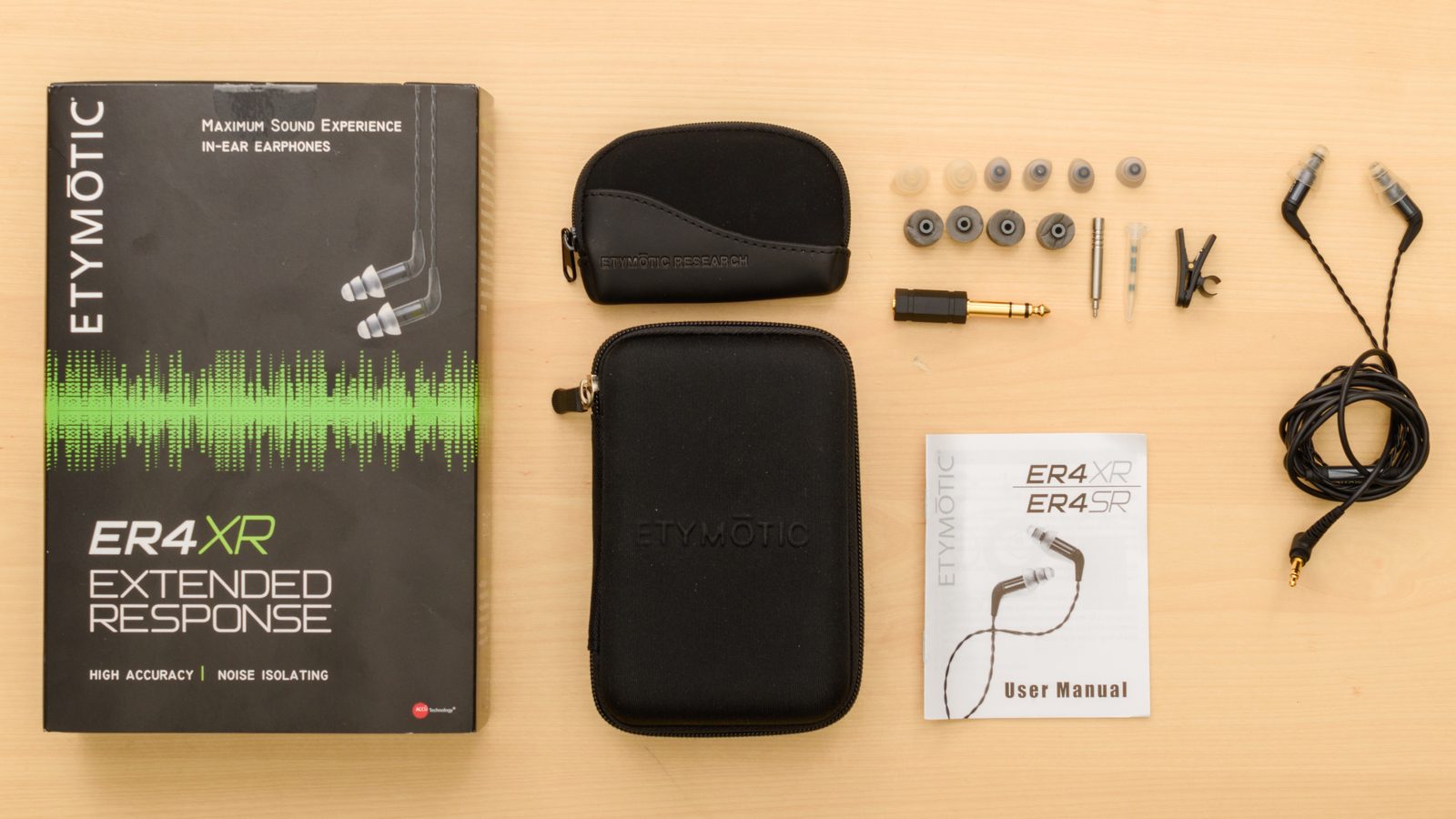
The ER4XR is the "Extended Response" version of a legendary studio monitor that has been the industry standard for decades. What you’re buying here isn't a fashion statement or a luxury lifestyle product—it’s a precision tool. The build is unapologetically utilitarian, featuring a slim, metal-bodied design that looks more like a hearing aid than a piece of high-end audio gear.
When you get them in, the world simply vanishes. The passive isolation is so aggressive it makes most active noise-canceling headphones look like a joke. You aren't just blocking out the hum of an airplane engine; you’re effectively plugging your ears with high-fidelity earplugs. As Max Settings noted, "There's IEMs I've heard that cost five times this that don't have this much detail." That isn't hyperbole. The resolution is startling, pulling micro-textures out of tracks that you’ve likely missed on every other pair of headphones you own.
However, this performance comes with a physical tax. The insertion depth is legendary for all the wrong reasons. You have to push these things deep into your ear canal to get the seal that makes the bass response work. As Linus Tech Tips bluntly put it, "Lube up because you ain't going to like it much otherwise." If you have sensitive ears, the sensation of having a plastic stem pressed against your inner ear is something you may never get used to.
Sound — what reviewers actually heard
The ER4XR takes the clinical, dead-neutral signature of the original ER4S and adds a tasteful 3-4dB bump in the sub-bass. It’s not a "bass-head" IEM, but it’s enough to give kick drums and synth bass lines the authority they need to feel real.
| Metric | Value | Context |
|---|---|---|
| Impedance | 45 ohms | Easy to drive, but benefits from a clean source |
| Bass Boost | 3-4 dB | Sub-bass focus, keeps mids clean |
| Sensitivity | 98 dB/V | Requires a decent volume knob |
| Cable Length | 5 feet | A bit long for pocket use |
Where it actually wins
The primary victory here is clarity. The ER4XR excels at separating complex layers in a mix. If you’re a producer checking a mix or an audiophile who wants to hear the exact decay of a reverb tail, these are peerless. The transient response is lightning-fast; there is no "smearing" of the sound, just pure, unadulterated information.
The passive isolation is the secondary win. Because it’s mechanical rather than electronic, you don't get that weird "pressure" feeling associated with ANC, and there's no battery to charge. For frequent flyers or commuters who work in loud environments, the ability to achieve a near-total silence floor is a superpower that few other IEMs can replicate.
Where it falls short
The biggest hurdle is the ergonomics. The deep-insertion design is polarizing, and for many, it’s a dealbreaker. You’re essentially committing to a "deep-dive" every time you want to listen to music. Then there’s the cable. It’s a 5-foot, somewhat stiff, memory-prone wire that suffers from significant microphonics. If you’re walking around, the sound of the cable rubbing against your shirt travels straight up to your ears like a stethoscope.
Additionally, the design is frustratingly dated. The L/R indicators are nearly invisible in low light, and the MMCX connectors, while detachable, feel like they belong on a piece of lab equipment rather than a consumer product. It’s a tool that demands you work around its limitations, rather than one that works for you.
Should you buy it?
Buy if you:
- Prioritize raw detail and technical resolution above all else.
- Need the best possible passive noise isolation for travel or studio work.
- Prefer a neutral, accurate sound signature with just enough sub-bass to keep things engaging.
- Are willing to trade physical comfort for world-class audio performance.
Skip if you:
- Have sensitive ear canals or a low tolerance for "invasive" fits.
- Want a wide, expansive soundstage (these are very "in-your-head").
- Need an IEM for active use or walking around (the cable microphonics will drive you mad).
- Are looking for a fun, bass-heavy V-shaped sound signature.
The ER4XR delivers world-class detail and isolation, but demands you endure an uncomfortably invasive fit to hear it.
Sources consulted
- Linus Tech Tips — Etymotic ER-4 Reference In Ear Monitors
- lachlanlikesathing — Etymotic ER4XR Review: A New Reference
- Super Review* — Etymotic ER4XR Super Review - Just a TOOL?
- Max Settings — Etymotic ER4XR Review | Legend Continues
Synthesis combines independent reviews above. Verdicts and quotes attributed to original creators. Affiliate disclosure: we may earn a commission from qualifying purchases via Amazon links.
Products covered in this review
Frequently Asked Questions
Is the Etymotic ER4XR worth buying?
If you can stomach the deep triple-flange insertion, you are rewarded with audio resolution that rivals $1,000 monitors and isolation that beats ANC. However, the physical discomfort, cable microphonics, and utilitarian design make them a tough sell for casual daily listening.
Who is the Etymotic ER4XR best for?
Audiophiles, frequent flyers, and professionals who prioritize extreme detail retrieval and maximum noise isolation over physical comfort.
Who should skip it?
Casual listeners, people with sensitive ear canals, or anyone looking for a wide soundstage and massive bass.