 HiFiRated
Chord Mojo 2 Review — A portable powerhouse overcomes a frustrating, screen-less interface to deliver benchmark-setting audio performance that rivals dedicated desktop gear
TL;DR
Reviewers unanimously agree that the Mojo 2 punches way above its price class in pure sound quality, resolution, and DSP features. While the color-coded button interface is frustrating and the port layout is archaic, the addition of Intelligent Desktop Mode makes it a highly vers
Verdict: Buy
What people are saying
Sources disclosed below
Reviewer Verdicts
Avg of 4 video reviews
Darko Audio, A British Audiophile, iiWi Reviews…
Pros
- +Class-leading sound quality with incredible resolution, transients, and natural tonality
- +Intelligent Desktop Mode protects battery life when plugged in constantly
- +Lossless DSP provides a highly effective 4-band EQ without degrading sound
- +Crossfeed feature successfully emulates a speaker-like listening experience on headphones
- +Addition of USB-C alongside legacy inputs
- +Excellent, premium build quality in a highly portable footprint
Cons
- −Cryptic, color-coded button interface requires keeping the manual nearby
- −Lack of an LCD screen makes navigating DSP and EQ settings frustrating
- −Retaining Micro-USB for legacy 'Poly' compatibility makes the port layout cluttered and awkward
Jordan Kim
Published May 3, 2026
This pocket-sized, battery-powered DAC sounds so good it actually outperforms Chord's own expensive desktop alternatives. It’s a rare piece of gear that makes you forget about the price tag the moment the music starts, even if you’ll want to throw it against a wall five minutes later when you’re trying to adjust the EQ.
What you're actually getting
The Chord Mojo 2 is a masterclass in engineering contradiction. On one hand, you have a device that delivers world-class, high-resolution audio that genuinely rivals dedicated desktop units costing twice as much. As The Headphone Show noted, it’s a rare case where the portable unit actually outperforms the brand's own Qutest in certain listening scenarios. The resolution, the transient speed, and the sheer naturalness of the presentation are, quite frankly, industry-leading.
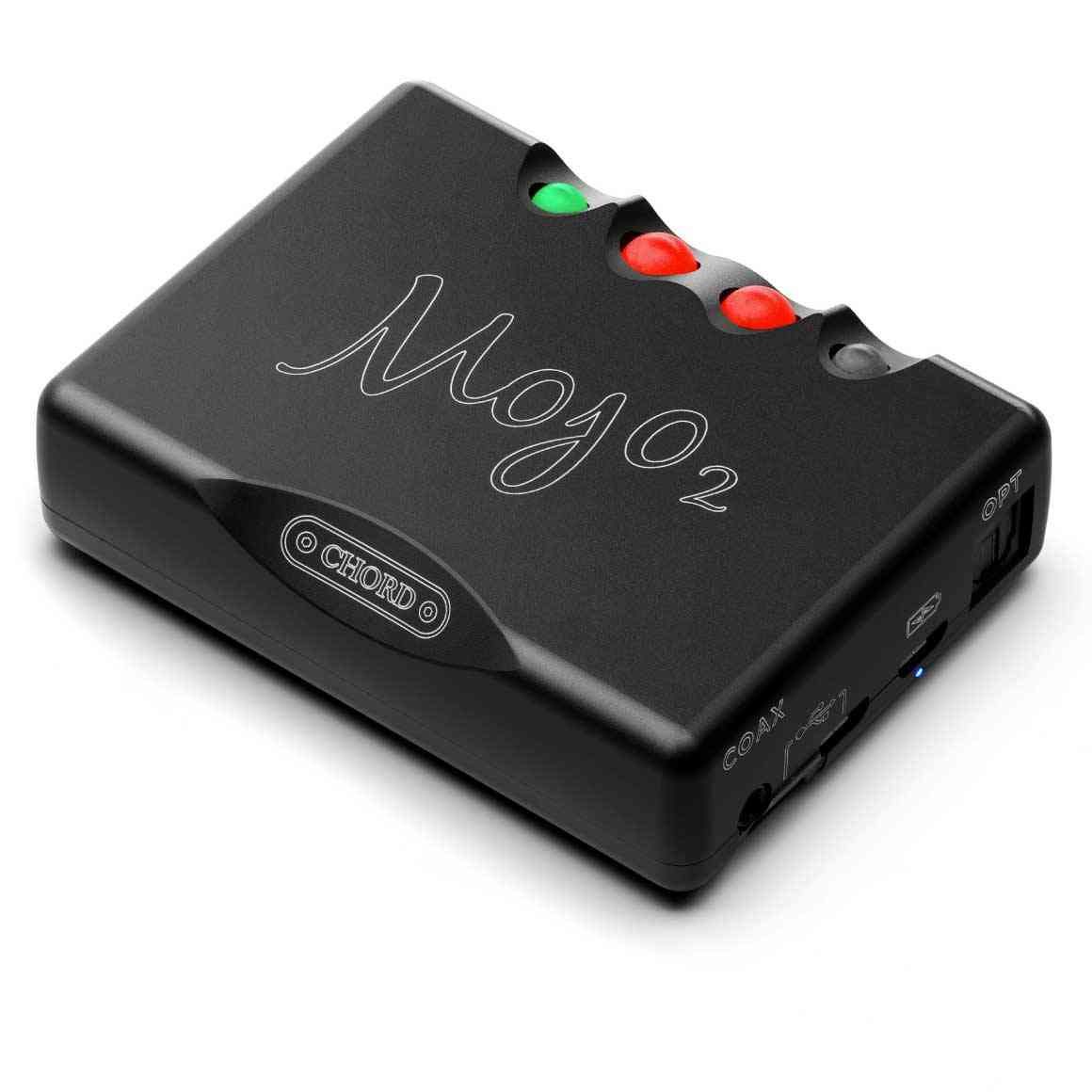
However, living with the Mojo 2 is an exercise in patience. Chord has stuck to its guns with a "poly-chromatic" interface—a series of glowing, color-coded spheres that serve as buttons and indicators. There is no screen. There is no intuitive menu. If you want to adjust the EQ or change the crossfeed settings, you are essentially playing a game of Simon Says with a manual glued to your hand. As iiWi Reviews put it, "You cannot fully utilize all of its functions and features without reading the manual."
Despite the interface headaches, the internal upgrades are massive. The addition of USB-C is a welcome modernization, and the "Intelligent Desktop Mode" is a stroke of genius for those of us who leave our gear plugged in 24/7, as it manages the battery health to prevent premature degradation. It’s a tiny, dense brick of audio perfection that feels like it was built to survive a nuclear winter, even if it was designed by someone who clearly hates user-friendly menus.
Sound — what reviewers actually heard
The Mojo 2 isn't just about specs; it’s about how it handles the signal. The 40,960-tap filter is the secret sauce here, providing a level of detail retrieval that makes most other portable DACs sound like they’re playing through a veil.
| Metric | Value | Context |
|---|---|---|
| Power (30Ω) | 600 mW | Plenty for most IEMs and dynamic headphones |
| Power (300Ω) | 90 mW | Sufficient for high-impedance cans |
| Processing | 40,960 taps | The "Chord sound" engine |
| Weight | 180g | Roughly the size of a small gerbil |
Where it actually wins
The Mojo 2 wins because it refuses to compromise on the signal path. The lossless DSP is the star of the show—it’s a 4-band EQ that allows you to sculpt the sound to your specific headphones without introducing the phase distortion or digital artifacts you’d get from software-based EQ. It’s surgical, clean, and incredibly effective.
Then there’s the crossfeed. Most crossfeed implementations sound like a muddy, phase-shifted mess, but Chord’s version actually creates a believable soundstage that mimics a pair of speakers in a room. It’s the kind of feature you turn on and forget about, only realizing how much you miss it when you switch back to a standard DAC. When you pair this with its ability to drive almost any dynamic headphone with authority, you realize you’re holding a true "endgame" device that happens to fit in your pocket.
Where it falls short
The interface is, to put it mildly, a disaster. In an era where even budget interfaces have crisp OLED screens, forcing a user to memorize which color corresponds to which frequency band is an unnecessary barrier to entry. As A British Audiophile lamented, "With this degree of complexity I can't help but think that a simple LCD screen would have been preferable." You will spend your first week constantly checking the manual just to figure out if you've accidentally turned the bass up or engaged the crossfeed.
Furthermore, the physical design is a bit of a relic. By retaining the Micro-USB port to ensure compatibility with the legacy Poly streamer, the port layout feels cluttered and awkward. It’s a classic case of engineering pride getting in the way of user experience. Additionally, while it handles most headphones with ease, don't expect it to perform miracles with ultra-demanding planar magnetics. If you’re trying to drive something like a Susvara, the Mojo 2 will sound soft and underpowered; it simply lacks the current to make those power-hungry beasts sing.
Should you buy it?
Buy if you
- Prioritize raw, high-end audio resolution above all else.
- Need a portable device that can double as a high-end desktop DAC.
- Want to use hardware-level, lossless EQ to tune your favorite headphones.
- Value build quality that feels like it will last a decade.
Skip if you
- Use extremely power-hungry planar magnetic headphones that require a dedicated desktop amplifier.
- Get frustrated by non-intuitive, menu-less interfaces.
- Prefer a "plug-and-play" experience without needing to keep a manual nearby.
The Chord Mojo 2 delivers desktop-class, endgame sound quality in a pocketable format, provided you can tolerate its cryptic interface.
Sources consulted
- Darko Audio — The Chord Mojo 2 is 2022's BEST DAC
- A British Audiophile — Still Relevant? Chord Mojo 2 DAC Review
- iiWi Reviews — Chord Mojo 2 versus many DACs
- The Headphone Show — Chord Mojo 2 Review - Our new reviewer likes this DAC/Amp
Synthesis combines independent reviews above. Verdicts and quotes attributed to original creators. Affiliate disclosure: we may earn a commission from qualifying purchases via Amazon links.
Products covered in this review
Frequently Asked Questions
Is the Chord Mojo 2 worth buying?
Reviewers unanimously agree that the Mojo 2 punches way above its price class in pure sound quality, resolution, and DSP features. While the color-coded button interface is frustrating and the port layout is archaic, the addition of Intelligent Desktop Mode makes it a highly versatile DAC/amp that can genuinely replace more expensive desktop units.
Who is the Chord Mojo 2 best for?
Audiophiles looking for a highly resolving, transportable DAC/amp with built-in EQ, or those wanting desktop-tier sound in a tiny footprint.
Who should skip it?
Users with extremely power-hungry planar magnetic headphones, or those who demand a straightforward, screen-based user interface.