 HiFiRated
Behringer UMC202HD Review — The ultimate budget underdog sacrifices flashy features and software bundles to deliver pure, unadulterated preamp performance
TL;DR
While it lacks the premium software bundles and fancy visual metering of the Focusrite Scarlett series, the UMC202HD nails the fundamentals. Its Midas preamps offer incredibly low noise floors that can handle gain-hungry dynamic mics, and the metal build ensures durability. It is
Verdict: Buy
What people are saying
Sources disclosed below
Reviewer Verdicts
Avg of 4 video reviews
Get.Pro.Recordings, Podcastage, Ed Thorne | Mixing & Mastering…
Reddit Discussion
Across 28 threads in r/homerecording, r/audioengineering, r/audiophile
Sentiment summary, not a rating
Pros
- +Exceptionally quiet Midas preamps with a very low noise floor
- +Sturdy, all-metal chassis that feels durable
- +Incredible value for the sub-$100 price point
- +True 192kHz/24-bit analog-to-digital conversion
- +Versatile input options including pad buttons and line/instrument switches
Cons
- −Very basic visual metering limited to simple signal and clip LEDs
- −Lacks the premium bundled software and plugins offered by competitors
- −Plastic knobs and push buttons feel slightly cheap compared to the metal body
- −Windows drivers can occasionally be finicky and require reinstallation
Jordan Kim
Published May 2, 2026
$59–$79
Price may vary. Updated regularly.
This $80 budget interface packs preamps so quiet they beat out competitors that cost twice as much. If you’ve spent any time in the home studio world, you’ve been conditioned to believe that "cheap" means "noisy." You expect a persistent hiss in your recordings or a chassis that feels like it might crack if you look at it too hard. The Behringer UMC202HD is the rare piece of gear that ignores that script entirely, focusing its entire budget on the one thing that actually matters: the signal path.
What you're actually getting
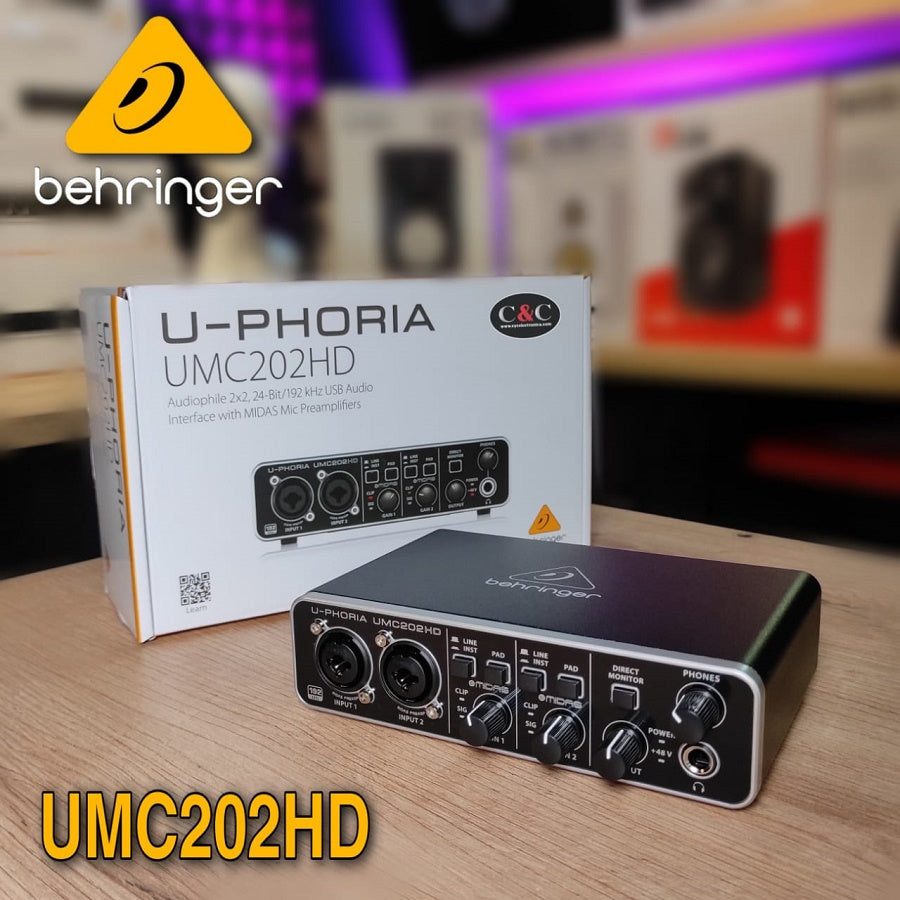
When you pull the UMC202HD out of the box, the first thing you’ll notice is the weight. It’s built like a tank. While other manufacturers in this price bracket are busy molding cheap, lightweight plastic, Behringer opted for an all-metal chassis that feels like it could survive a drop off your desk. It’s a utilitarian brick of a device that doesn't care about looking pretty; it just wants to get your audio into your computer without adding any junk along the way.
The real magic, however, is under the hood. The Midas-designed preamps are the star of the show. As Julian Krause noted in his testing, "The interface has an astonishingly low EIN of -129.1 dBu... the best noise performance of all the interfaces I've measured so far." That isn't just marketing fluff—it’s a measurable, objective win. Whether you’re recording a delicate acoustic guitar or a voiceover, you aren't fighting a noise floor. You’re getting a clean, transparent signal that honestly puts some $200 interfaces to shame.
That said, you aren't getting the "premium" experience here. There is no fancy software suite, no slick digital control panel, and the visual metering is limited to basic signal and clip LEDs. If you’re the type of person who needs a visual representation of your gain staging or a massive library of bundled plugins to feel like you’ve made a good purchase, you’ll be disappointed. This is a "plug it in and go" tool, not a lifestyle brand.
Performance — what reviewers actually measured
| Metric | Value | Context |
|---|---|---|
| EIN | -129.1 dBu | Industry-leading noise floor |
| Dynamic Range | 102.3 dBA | Solid for the price |
| Phantom Power | ~46V | Sufficient for most condensers |
| Preamp Gain | 51 dBFS | Clean, but tight for SM7B |
| Sample Rate | 192 kHz | Professional-grade resolution |
Where it actually wins
The UMC202HD wins by being ruthlessly efficient. It provides 192kHz/24-bit conversion, which is overkill for most bedroom producers but nice to have in your back pocket. The versatility is also a major plus; having dedicated pad buttons and line/instrument switches on the front panel means you aren't digging through software menus just to switch from a guitar to a synth.
The headphone output is another surprise. Ed Thorne pointed out that "the Behringer has a ridiculously loud headphone output much to my surprise," which is a massive relief if you’re using high-impedance monitoring headphones. You won't find yourself cranking the volume knob to the max just to hear your mix. It’s a workhorse that prioritizes the physical connection between your gear and your DAW.
Where it falls short
The trade-offs are obvious once you start using it daily. The knobs and push buttons feel undeniably cheap—they have a hollow, plasticky tactile response that contrasts sharply with the solid metal body. It’s a strange juxtaposition, like putting plastic hubcaps on a steel-frame truck.
Then there’s the driver situation. While it works perfectly for most, Windows users occasionally report finicky behavior. You might find yourself reinstalling drivers or fiddling with buffer settings more often than you would with a more expensive, polished ecosystem like Focusrite. Additionally, if you’re a fan of "colored" preamps—that warm, vintage-sounding saturation—you won't find it here. These preamps are clinical and transparent. If you want character, you’ll have to add it in your DAW later.
Should you buy it?
Buy if you:
- Are on a strict budget but refuse to compromise on audio quality.
- Need a durable, portable interface that can take a beating in a backpack.
- Already own your own plugins and don't need a "starter pack" of software.
- Use gain-hungry microphones and need a low noise floor to keep your signal clean.
Skip if you:
- Want a premium software bundle to jumpstart your production.
- Need advanced visual metering to keep an eye on your levels.
- Prefer a "warm" or "colored" sound signature straight from the preamp.
- Are easily frustrated by occasional driver maintenance on Windows.
The Behringer UMC202HD delivers shockingly quiet preamps and a sturdy metal chassis at a price that embarrasses interfaces twice its cost.
Sources consulted
- Get.Pro.Recordings — Best and Worst Audio Interfaces... TESTED and COMPARED!
- Podcastage — Behringer U-PHORIA UMC204HD Review / Test / Explained
- Ed Thorne | Mixing & Mastering — Focusrite Vs Behringer Audio Interface Comparison with Audio Examples
- Julian Krause — Behringer UMC202HD review (with noise measurement)
Synthesis combines independent reviews above. Verdicts and quotes attributed to original creators. Affiliate disclosure: we may earn a commission from qualifying purchases via Amazon links.
Products covered in this review
Frequently Asked Questions
Is the Behringer UMC202HD worth buying?
While it lacks the premium software bundles and fancy visual metering of the Focusrite Scarlett series, the UMC202HD nails the fundamentals. Its Midas preamps offer incredibly low noise floors that can handle gain-hungry dynamic mics, and the metal build ensures durability. It is the undisputed king of the sub-$100 audio interface market.
Who is the Behringer UMC202HD best for?
Budget-conscious beginners, podcasters, and home studio musicians who need clean, low-noise audio without paying extra for bundled software.
Who should skip it?
Users who rely heavily on premium bundled plugins, need advanced visual metering, or want built-in analog coloration for their vocals.