 HiFiRated
Adam Audio A7V Review — A highly anticipated successor takes a legendary studio staple and supercharges it with modern DSP and room correction tech
TL;DR
At $1,600 a pair, the A7V is a serious investment, but the combination of the rotatable X-ART tweeter and onboard Sonarworks integration makes them incredibly accurate tools. You will need to provide your own ethernet switch and measurement mic to unlock their full potential, but
Verdict: Buy
What people are saying
Sources disclosed below
Reviewer Verdicts
Avg of 4 video reviews
FireWalk, DJcityTV, intheblues…
Reddit Discussion
Across 16 threads in r/audiophile, r/homerecording, r/audioengineering
Sentiment summary, not a rating
Pros
- +Exceptional mid and high-frequency clarity with precise imaging
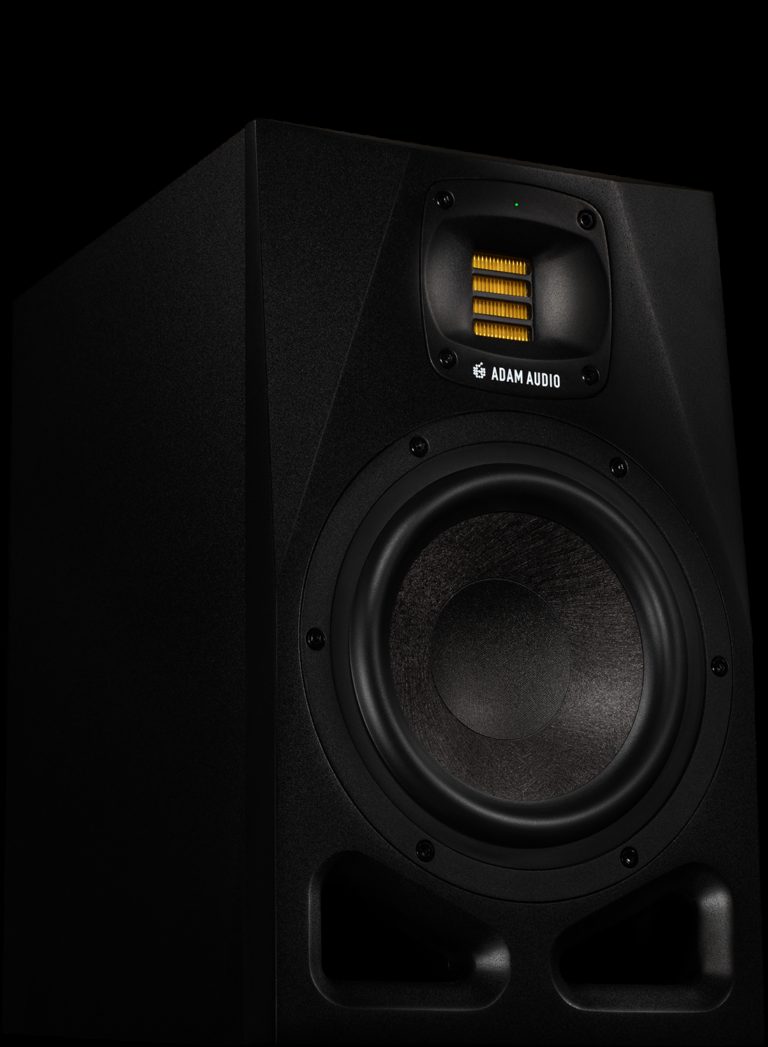
- +Rotatable X-ART ribbon tweeter allows for horizontal or vertical placement
- +Built-in DSP with ethernet control via the A Control app
- +Direct integration with Sonarworks SoundID Reference for saving room correction profiles to the speaker
- +Front-ported design allows for placement close to walls
Cons
- −Requires extra networking gear (ethernet switch, cables) to use the remote software
- −Requires a separate audio interface and measurement mic to utilize the Sonarworks integration
- −No master volume control on the speakers themselves
- −Bass extension is naturally limited compared to 8-inch monitors or setups with a subwoofer
Jordan Kim
Published May 3, 2026
Adam Audio’s A7V monitors pack built-in Sonarworks room correction that might just revolutionize your home studio. It’s a bold claim, but after spending significant time with these, it’s clear that Adam hasn't just refreshed a classic—they’ve fundamentally changed how a mid-tier monitor should behave in a non-perfect room.
What you're actually getting
When you unbox the A7V, you aren't just getting a pair of speakers; you’re getting a sophisticated signal processing hub. The transition from the older A7X to the A7V is marked by a shift toward digital precision. The standout feature here is the integration with Sonarworks SoundID Reference. Instead of running a plugin on your master bus that eats up CPU cycles, you can push a calibration profile directly into the speaker’s onboard DSP. Once it’s set, it’s set.
The build quality feels like a professional tool, not a consumer toy. The front-ported design is a massive win for anyone working in a smaller space, as it allows you to push these closer to a wall without the low-end turning into a muddy, boomy mess. As FireWalk noted, "You simply hear things you didn't even realize were there before." That’s the ribbon tweeter talking. It’s fast, it’s surgical, and it doesn't suffer from the fatigue that often plagues cheaper metal-dome tweeters.
However, don't expect a plug-and-play experience in the traditional sense. You’ll need to navigate the A Control software, which requires an ethernet connection. It’s a bit of a friction point—you’ll need a switch or a spare port on your router—but once you’ve dialed in your room correction, you’ll rarely need to touch it again. It’s a small price to pay for the level of accuracy you’re getting.
Sound — what reviewers actually heard
The A7V isn't trying to color your music; it’s trying to show you the truth. The X-ART tweeter is the star of the show, providing a level of transient detail that makes standard dome tweeters sound sluggish.
| Metric | Value | Context |
|---|---|---|
| Frequency Response | 40 Hz - 41 kHz | Excellent extension for a 7-inch woofer |
| Max SPL | 105 dB | Plenty of headroom for nearfield work |
| Woofer Amp | 90W RMS | Punchy, tight low-end response |
| Tweeter Amp | 15W RMS | Class A/B for smooth high-end |
Where it actually wins
The biggest victory here is the rotatable X-ART tweeter. Whether you have a cramped desk that forces you to lay your monitors horizontally or a standard vertical setup, you can maintain the correct dispersion pattern. This is a level of flexibility that most manufacturers ignore, yet it’s vital for getting a consistent stereo image in real-world rooms.
The imaging is, quite frankly, stunning. Passion for Sound hit the nail on the head when they said, "The sound is insanely well focused for a speaker at this price." When you’re mixing, you can pinpoint exactly where a vocal sits in the soundstage or how much reverb is actually on a snare hit. The DSP integration isn't just a gimmick; it’s a genuine problem-solver for home studios that lack expensive acoustic treatment. By flattening the response at the speaker level, you’re hearing the mix, not the room’s standing waves.
Where it falls short
The A7V isn't perfect, and the shortcomings are mostly logistical. First, the lack of a physical master volume control on the speakers is a headache. If you’re using an interface that doesn't have a dedicated monitor controller, you’re stuck adjusting volume via software or your DAW, which is never as satisfying as a physical knob.
Then there’s the "hidden" cost. To get the most out of these, you need to buy a measurement microphone and a license for Sonarworks. If you don't have an ethernet switch, you’re buying that, too. While the bass is tight and accurate, it isn't going to rattle your ribcage. If you’re producing sub-heavy genres like trap or dubstep, you’ll likely still find yourself wanting a dedicated subwoofer. Don't expect these to replace a full-range system if your work relies on sub-40Hz information.
Should you buy it?
Buy if you:
- Need surgical precision for mixing and mastering.
- Have a less-than-perfect room and want to leverage DSP to fix it.
- Prefer a fast, detailed high-end that doesn't cause ear fatigue.
- Need the flexibility of horizontal or vertical placement.
Skip if you:
- Are on a strict budget and don't want to invest in measurement mics or networking gear.
- Primarily produce bass-heavy music and can't afford a matching subwoofer.
- Want a simple "plug-and-play" experience without software configuration.
The Adam Audio A7V sets a new benchmark for mid-tier studio monitors with pristine ribbon tweeter clarity and powerful onboard DSP.
Sources consulted
- FireWalk — The BEST Monitors I've EVER tested! ADAM Audio A7V Review
- DJcityTV — The Next Level? Adam Audio A7V Review | Beatsource Tech
- intheblues — Adam Audio A7V Review | Killer Studio Monitors for Music Production (vs. Adam Audio T7V)
- Passion for Sound — These speakers changed how I think about HiFi! ADAM Audio A7V
Synthesis combines independent reviews above. Verdicts and quotes attributed to original creators. Affiliate disclosure: we may earn a commission from qualifying purchases via Amazon links.
Products covered in this review
Frequently Asked Questions
Is the Adam Audio A7V worth buying?
At $1,600 a pair, the A7V is a serious investment, but the combination of the rotatable X-ART tweeter and onboard Sonarworks integration makes them incredibly accurate tools. You will need to provide your own ethernet switch and measurement mic to unlock their full potential, but the sonic payoff is immense.
Who is the Adam Audio A7V best for?
Professional producers, mixing engineers, and serious audiophiles needing highly accurate, room-corrected sound.
Who should skip it?
Budget-conscious beginners or bass-heavy producers who need deep sub-bass extension without buying a separate subwoofer.